On Dolly Parton, Brilliant In Every Era

Share
On Dolly Parton, Brilliant In Every Era

Today marks an unfathomable loss: Dolly Parton has died. Brilliant artist, devoted philanthropist, remarkable human; to list her achievements here feels redundant, as the cult of Dolly has long since gone national. Here, I've collected some of my writing on Dolly that has been scrubbed from the web; it was originally presented as digital liner notes for a series of Parton reissues put out by Vinyl Me Please. Conveniently, I wrote about three albums that offer snapshots of the star at three distinct stages: her solo debut, her commercial peak, and her veteran, catalog artist era. Hopefully it will guide some listening, remembering and mourning.

Hello, I'm Dolly (1967)

It's hard to imagine a time when the music industry didn't know what to do with Dolly Parton — before she was instantly acknowledged as not just a self-evident musical genius, but a larger-than-life multimedia icon. But when a 19-year-old Dolly Rebecca Parton first signed to Monument Records in 1965, those men who thought they held the keys to her musical future were befuddled. 

"My voice is pitched real high and people thought it sounded childish," Parton explained in her first major interview with the Music City News in 1967. "They thought it sounded young — too young — so they thought I might have a better chance in rock 'n' roll since you really didn't have to sing any certain way to be rock 'n' roll," she quipped, laughing. Indeed, Parton's first singles are a mishmash of '60s pop stylings, a little rockabilly and a little in line with the era's girl groups, with her irrepressible voice shining through all the while.

Luckily, Dolly herself was never confused about why she came to Nashville the day after she graduated high school from her tiny hometown in Eastern Tennessee. "I really came to do country because I always sung country," the 21-year-old said in that same first interview, with characteristic gumption. "That's what I was and what I wanted to be."
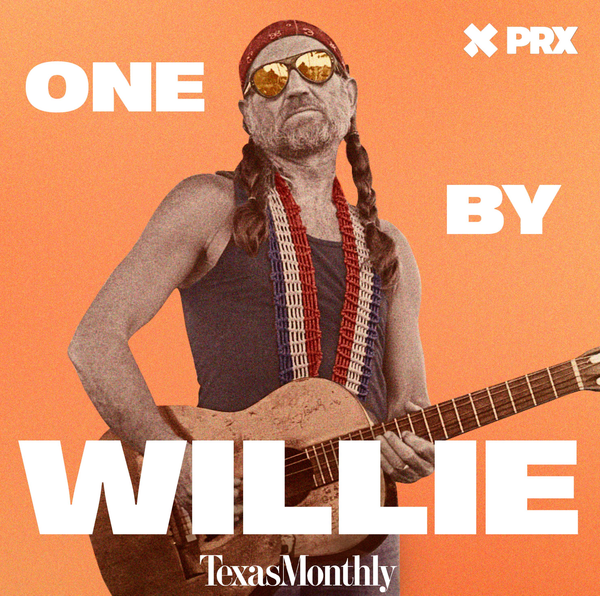
That self-awareness and assurance makes Dolly's debut album Hello I'm Dolly, which was released not long after that interview, sound entirely of a piece with her later work — and all her work. Almost entirely written or co-written by Parton herself, the release was an ideal opening salvo, brimming with conviction and spunk as well as hard-to-shake pathos. The icon's album-length introduction to the world makes it obvious that Dolly always knew who she was — her sound, her strengths and her ambitions — from the top of her teased and hairsprayed hair down to the tips of her toes. She just had to wait a few years (or decades, really) for the industry and the world to catch up.

While Parton was humoring her label by recording those early pop singles, she was writing songs — specifically, country songs that were getting picked up by other artists. The Nashville songwriter-to-country performer pipeline was somewhat established by the time Parton got to town. But that pipeline, for the most part, was only working for men. With the exception of Loretta Lynn, whose brash songwriting and powerful voice were starting to make her a sensation (and set the stage for Parton's boldness), there weren't many successful women singer-songwriters in country music in the mid-'60s — and Lynn hadn't spent much time writing for other people the way that Parton was.

The Music City News interviewer asked her about her writing, asking whether she'd sing or write if she was forced to choose. Parton seemed almost irritated by the question. "Well, I couldn't really make a choice because I have to write and I have to sing and I'd rather do both," she replied. "I don't really care to sing my own songs, but I do like to sing 'em because I think I can put more of the kind of feelin' I want in it, rather than a song that someone else has written for me."

Fittingly, Parton's breakthrough — the song that compelled her label to let her record the country music she'd been wanting to make the whole time — almost immediately became a standard of the genre. Her uncle and manager Bill Owens got a song they had co-written, "Put It Off Until Tomorrow," to little-remembered country singer Bill Phillips; by the end of 1966, it had been recorded by no fewer than six other artists (including Loretta Lynn and Skeeter Davis) and Parton's voice, which had appeared uncredited on Phillips' recording, was the talk of Nashville. 

"Everybody heard that harmony part and said "Who is that?'" producer Jack Clement recalled in the Parton biography Smart Blonde: The Life Of Dolly Parton. "No one cared about Bill Phillips…she's a natural-born show-stealer." 

Parton's version, as it appears on Hello, I'm Dolly, is raw and instantly recognizable. "I like ballads — real strong, pitiful, sad, cryin' ballads," she said in that same early interview, and on her debut album she anticipated any number of classic heartbreak tunes that she would write and perform over the years. One of those country songs that sounds like it's always existed, "Put It Off Until Tomorrow" is the first entry in the Parton canon.

The album's first single, though, could hardly have sounded more different from the weeper that got her noticed. "Dumb Blonde," written by Curly Putnam, was just as fitting for the singer, though, whose bright blonde hair and sharp wit are as much her signatures as her songs. "We went pickin material and wanted somethin' that would be different and gimmicky that would get me on the road and we thought that suited me," she told the Music City News. "I am a dumb blonde! No, but…." Her performance, conversational and teasing, showed her range and charisma; she'd just signed on as Porter Wagoner's "girl singer" before the album was released, and was developing her on-camera and on-stage persona in real time.

That same humor is evidenced across the record's A-side. "Your Ole Handyman," an ode to a woman who does all the work; "I Don't Want To Throw Rice," whose chorus continues, "I want to throw rocks at her"; and "Something Fishy," about a lover's suspicious fishing trip, all tap into the same kind of whimsical, borderline-novelty tone that Parton wore so easily. 

The album's B-side, by contrast, almost tells a story about the trials and tribulations of a young woman's love affairs — feeling lust ("Fuel To A Flame") and subsequently potentially unfair regret ("I've Lived My Life"), and warning other women away from that same regret ("The Company You Keep"); feeling used ("The Giving And The Taking" and "The Little Things") and hurt ("I'm In No Condition").

The throughline on Hello, I'm Dolly is the 21-year-old Parton's consistency as a performer and writer. No matter the topic or style, on the album she is unmistakably herself from cover to cover — she told her story, her way, through her songs from the very, very start. 

The only thing that's changed about Parton from the way she approached music when she was 21 years old to now, as she moves through her eighth decade, is the way she views those songs. No longer does she see the singing and the writing as two equal parts of the same impulse: "If I had to choose just one thing to be, I would choose to be a songwriter," Parton wrote in her 2020 volume Dolly Parton, Songteller: My Life in Lyrics. "I could happily just sit in my house forever, enjoy life and write songs. The songs lead to everything else."

9 to 5 and Odd Jobs (1980)

“I can’t think of two more dissimilar women than Jane Fonda and Dolly Parton, and yet I hear they’re going to make a movie together,” wrote one would-be critic in a 1979 nationally syndicated Q&A column, summing up the views of plenty of skeptics when news broke that Parton would me making her Hollywood debut alongside Hanoi Jane herself. What could the activist-actress possibly have in common with the self-professed Backwoods Barbie?

A lot, as was obvious to anyone who had been listening to the sharp and inevitably politically charged observations that punctuated Parton’s songwriting from the beginning. “I’m just an average working girl trying to get along in this old world,” she sang in 1972’s “A Little At A Time,” an eerily prescient ode to the inescapability of debt in the working class — in one uniquely topical example out of many.

But less than a decade later, Parton’s decision to kick off her movie-star turn with the effervescent 1980 Fonda-Parton-Lily Tomlin vehicle 9 to 5 still provoked the aforementioned head scratching. Parton was fresh off the biggest pop success of her career to that point, thanks to a quite-intentional crossover with “Here You Come Again” and the Hot 100 bait that followed; with the increase of her reach, as so often happens, came a contraction of her perceived persona into blonde, big-boobed bimbo. That persona did not feel like a natural fit into a movie inspired by the very real organizing of working women in the ’70s and ’80s, including a still-active organization 9to5, the National Association of Working Women.

Of course, Parton’s performance in the film was a coup. That coup, though, was somehow topped by what she accomplished with the album she made to coincide with the film’s release — not its actual soundtrack, but an ambitious collection of original and cover songs tied to the movie’s labor themes. 9 to 5 and Odd Jobs was received as a return to country form for the singer after her pop dalliances, but to Parton herself it was something even bigger and more ambitious than that. “Now I can write and record whatever I want, whatever way I want,” she told the Chicago Tribune shortly after the album was released, explaining that her pop success had freed her from the churn and expectations of Music Row.

What she wanted, it turned out, was both fun and smart, country and irreverent. The album’s politics and tone are established with its undeniable, era-defining title and opening track, which somehow distills the ideas of 9 to 5 even better than the movie itself does in an absolutely addictive pop package. There’s the perfect, signature chug-a-lug piano groove from the Wrecking Crew’s Larry Knechtel that dissolves into danceable lite funk that has just enough bite to be believable (punctuated by click-clack typewriter sounds courtesy of Parton’s acrylic nails) — an addictive instrumental even before Dolly turns it into a timeless anthem. 

When she does, with lyrics that are so deep and potent and even more relevant today than they were in 1980, it’s hard not to get almost emotional at the sheer force and power of her words. You can’t pick the best line: Is it the chorus, “Barely gettin’ by, it’s all takin’ and no givin’”? Or “You’re just a step on the boss man’s ladder”? Or my personal favorite, “It’s a rich man’s game, no matter what they call it / And you spend your life puttin’ money in his wallet”? It never, ever gets old because it’s never stopped being true — true in the most vivid, lucid, unsentimental way possible, even while it’s presented as a celebration of solidarity.

“I was writing it for workers, period,” she told Playgirl of the song in 1981, diffusing the idea that it was specifically for women in spite of the movie’s scope (as quoted in Randy L. Schmidt’s Dolly on Dolly). “I knew that I could write a song about myself and my dad and my brothers and my sisters and my friends and the people who work nine to five,” she added to Rolling Stone.

At the time, Parton attempted to diffuse the implied politics of working with Fonda, and practice the tried-and-true (if currently abandoned) Nashville tack of, “That’s none of my business”; “I wouldn’t have gotten involved if I thought it was gonna to be a sermon of some sort,” she said in the same interview. “I think it’s very obvious what it’s sayin’.”

The album’s message is just as clear, tacitly tying the experiences of miners, factory workers, migrant workers, office workers and sex workers together by collecting their stories in a concise, 35-minute album (a rendition of Sly & The Family Stone’s “Everyday People,” another tribute to unity against oppression, was even among the outtakes). Whether on Woody Guthrie’s “Deportee (Plane Wreck At Los Gatos)”) or her own gospel-inflected “Hush-A-Bye Hard Times,” Parton is equally convincing, laying out the lyric and aesthetic template she’d follow for the rest of her career: upbeat and genre-agnostic, but never naïve.

9 to 5 and Odd Jobs concludes with a throwback to Parton’s songwriting past — further proof, if any was needed, that singing about poor people’s problems and joys has been a career-long project for the iconic singer and songwriter. Parton originally recorded “Poor Folks Town” with Porter Wagoner with a considerably more traditional string band in 1972; alone, the song’s jubilant tone shines through far more. 

“Everybody in the community stuck together,” she remembered of her own youth, the inspiration for the song, in Dolly Parton, Songteller: My Life in Lyrics. “Nobody had any money, but our lives weren’t based on money. We needed just enough to get by. … I think it’s one of my best-written songs, ever.” 

As a whole, the album offers a rich portrait of a fearless artist at her most ambitious, inside and outside of the recording studio. Parton had begun giving longer and more in-depth interviews with each new success, starting to share the imminently quotable tidbits that would become known as Dolly-isms. Just before the album and movie were released, she did a lengthy feature with Cosmopolitan, in which she offered a perfect extension of the “9 to 5” ethos when describing how she tries to live: “I don’t want to own anything,” she explained. “I want to share.”

Blue Smoke (2014)

“No, I am not for your amusement,” Dolly Parton says with a wink on one of Blue Smoke’s deeper album cuts, the frothy “Lover Du Jour.” Ostensibly a rejoinder to some woefully unserious paramour, the quip could offer a clue as to why the iconic singer recorded the album — her 42nd — in the first place: because she wanted to. 

By the time Blue Smoke was released in 2014, the Dolly tides had almost fully turned. The then 68-year-old singer had come full circle in a way, from savant to country music punchline to memefied global icon whose cultural significance sometimes outpaced even her musical impact — most often evidenced by debates over whether or not she could credibly be called a “feminist” (a term she neither embraces nor vehemently rejects), and a booming business in merchandise that positioned her as some kind of human deity (WWDD?). She certainly didn’t need to record a new album, except perhaps as the nominal impetus for a tour; her legacy as an artist had been cemented decades earlier, and most listeners couldn’t even be trusted to give the new stuff a shot when they could easily listen to “Jolene” for the zillionth time instead.

But Dolly isn’t for our amusement, really, nor is she for whatever elaborate belief system we might project onto her. She chose to make a vibrant, rollicking new album that included members of her Mighty Fine touring band presumably because she wanted to, and because it’s what she does — what she does with the kind of clarity and ease that can make any music timeless.

The release is, in many ways, of a piece with much of her late-era output: a collection of new and old originals, covers and collaborations, many of which have a decidedly bluegrass tinge and many others that display the same polished country pop styles Parton had spent decades refining. Blue Smoke is named for both the album’s title track and the lovely haze of Parton’s native Smoky Mountains, which she’s paid tribute to often over the course of her career — “It was a song that brought me out of the Smoky Mountains and it will be a song that will lay me back down in the ground in the Smoky Mountains,” as she put it during the album’s press tour. 

Yet the release is hardly bogged down in nostalgia. Instead, Parton approaches familiar forms and ideas with characteristic verve and expertise. “Blue Smoke” is a classic-sounding train song that had been in Parton’s live repertoire for years before she recorded it — nominally about heartbreak but still overflowing with bluegrass-gospel energy, it begs a singalong. Getting the album off to a bright, virtuosic start, the song also spotlights the impossible polish of Parton’s collaborators. Kent Wells, her longtime bandleader, produced much of Blue Smoke, honing it to a clean, warm veneer that allowed Parton’s still-powerful voice to shine right alongside the lush instrumentals. 

“Unlikely Angel,” which Parton originally wrote for a 1996 made-for-TV Christmas movie of the same name, is an impeccably gentle bluegrass love song, while “Home” channels that same vintage sound into a much more contemporary framework (including drum machines). Though it didn’t wind up on the country charts, the bouncy tune still bears all the trappings of a surefire radio hit.

The more haunting side of the Smoky Mountains gets play on the album as well: “If I Had Wings,” a stripped-down original, seems like it should be the soundtrack to some grim backwoods tale — at least until Parton takes it a capella at the end for a powerful vocal showcase, proving that she hardly needs a camera to make a movie out of a song. 

“Banks Of The Ohio,” a traditional murder ballad, gets a Dolly spin with a new intro she wrote that transforms the song’s narrator into a journalist charged with reporting on the tragedy. Sung reverently, with close harmonies that are either a cappella or accompanied by acoustic strings, the song is a moving tribute to the depth of Parton’s own musical heritage — and evidence of how naturally it still seems to come to her to serve as a conduit to that rapidly vanishing musical past. Parton performed at Glastonbury for the first time not long after this album was released, and performed this quiet, somber song for the tens of thousands-strong crowd, silencing them with ease by singing a tune that likely traced back to the very land they were standing on.

Parton performs plenty of other Dolly-only feats — turning a Bon Jovi song into a gospel revival anthem (“Lay Your Hands On Me”), duetting with Willie Nelson (“From Here To The Moon And Back”) and Kenny Rogers (whose appearance on ‘You Can’t Make Old Friends” took on new weight following his passing in 2020), and successfully selling the aforementioned quasi-Francophone “Lover Du Jour.”

The album’s crown jewel, though, might also be the most impressive feat of them all: a fresh, distinctive, endlessly believable bluegrass take on the Bob Dylan chestnut “Don’t Think Twice.” Parton sings the endlessly covered song with candor and wit, one ace songwriter interpreting another. She alluded to a possible “Dolly Does Dylan” album during the press run, adding the caveat that he’d declined to join her for an earlier cover of “Blowin’ In The Wind” and so she wasn’t sure if she should pursue it. But it’s hard to imagine anyone — even Dylan — hearing this remarkable rendition and not begging for more, which is, of course, Dolly’s magic, whether it’s for our amusement or not. 

And finally...

I wrote about Parton's "In The Good Old Days (When Times Were Bad)" for HILOBROW's "Dolly Your Enthusiasm" series — a snippet:

Hunger, medical ailments that she and her family couldn’t afford to treat, endless work, shelter that couldn’t protect them from the elements, extreme weather reducing their farm to nothing — all get their due in the song, without the redemptive affection heard in Parton’s “Coat Of Many Colors” and “My Tennessee Mountain Home.” The singer has long been as prone to self-mythologizing and rural reverence as the next Nashville icon (see: Dollywood), but “In the Good Old Days” shows that for all that fantasy, Parton still centers a core truth. “No amount of money could buy from me the memories that I have of then,” she acknowledges in the song’s hook, before hammering home its main point. “No amount of money,” she sings, “could pay me to go back and live through it again.”

Read the rest here.