What If We Don’t?: Sapphic Imagery in Mainstream Music — A 'Rainbow Rodeo' Guest Post!
Sapphic imagery is a recurring theme in mainstream country music these last few years – but why? And what if we don't?
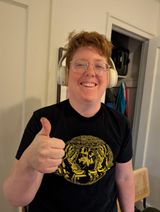
This week, we have another guest post to help honor Pride Month (if you haven't had a chance to read our as-told-to from Jenni Rose of Vandoliers, check it out here!), this time from the wonderful, dedicated writer and curator Rachel Cholst!! We're cross-posting this essay she wrote for her site Rainbow Rodeo, which you should visit and subscribe to stat for incredibly thoughtful and thorough coverage of all things related to LGBTQIA+ country artists. Below is a little intro to Rachel and her work!
Rachel Cholst is an educator and music journalist in New York City. Her long-running site Adobe & Teardrops featured marginalized voices in Americana, something her current project Rainbow Rodeo does specifically for . Her work has appeared in No Depression, Good Country, The Nashville Scene, The Boot and Wide Open Country. She is currently the voice of the Sirius XM XTRA channel Country Pride. Rainbow Rodeo can be enjoyed as a zine, podcast, newsletter, and website.
Also: Rainbow Rodeo is running a fundraiser and subscription drive! Meet their 600/500 challenge here and get a free zine or t-shirt!
Onto the essay:
We've got a representation problem in mainstream country music. That's nothing new, of course. But what if the problem is that there's...too many lesbians?
I shouldn't get ahead of myself, though. It's not that there's too many. It's what they're used for. In mainstream country music, queerness is still the Love That Dares Not Speak Its Name. But over the last few years, we've seen Sapphic imagery in a number of mainstream country outlets. I want to know why.
Most recently, and perhaps the biggest splash, is the queer teenage couple in Ashley McBryde's video for "What If We Don't?" If you haven't watched it yet, do it somewhere you can sniffle a little, because...woof.
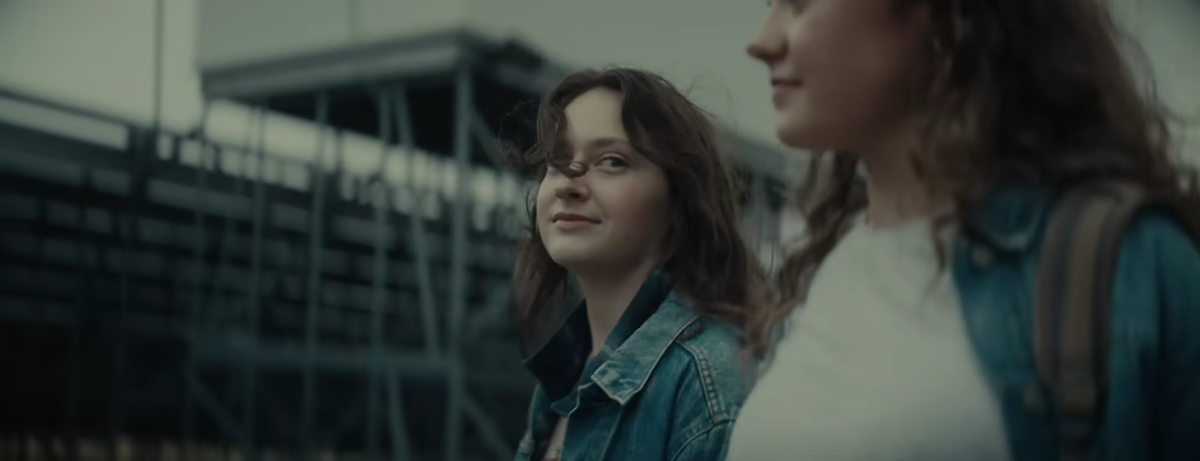
The video begins with simulated EMDR lights, suggesting that it will surface a traumatic memory. In this case, a young girl with a guitar case meets up with a girl friend after school, by the bleachers. They giggle and hold hands, the girl with the guitar steals a glance (see above) while a downpour threatens – and then her friend waves goodbye and climbs into the car with her boyfriend. The protagonist hangs back regretfully to take care of something on her phone. When she pulls out of the school, she sees a series of police cars and ambulances flash by her – only to realize whom they're for.
The story is intercut with McBryde singing passionately at night next to those seem bleachers – drawing a line between herself and the girl with the guitar, that this is her painful memory. The song itself is about the dangers of staying silent about your feelings – because you never know when it'll be too late to confess your love for someone.
I am less interested in whether or not this is McBryde's "coming out," or the rumors that have been surrounded her. If she wanted to come out to her fans, she would. Instead, I want to think through what it is that McBryde is doing by making this a queer story in the first place.
McBryde confirmed that she really did lose a close friend in high school due to an automobile accident – but, as to the relationship shown in the video, she told Billboard:
“That’s definitely by design, to leave that up to the viewer who the young person is most interested in because at that time, especially at that age group, you’re not sure,” she says. “A lot of the times you’re like, ‘Oh my gosh, I really enjoy hanging out with these two, and I can’t tell exactly.’”
Even though McBryde has declared Wild, the album the track comes from, as her shedding industry expectations, this does seem like a missed opportunity to engage in a discussion of queer representation and her direct relationship to it. For a song that's about living without regret, constructing the video with a queer love triangle adds emotional weight to this tragedy. If the video is supposed to be a flashback to McBryde's youth (or someone of that age), then there really couldn't have been a way to express those feelings as a teenager – and, arguably, not a great opportunity to do so in rural Arkansas even now. Either way, it's a subtle commentary – why, exactly, can't a queer teenager confess to her crush? The car accident might not have been avoided, but maybe things could have been different if the two of them had been dating.
We've come along way since Kacey Musgraves' "Follow Your Arrow" was the one shining gesture towards queer people in mainstream country music, and "Girl Crush" was more oblique. (I'm sorry, there is simply no way that song wasn't written about exactly what we all know it's about.) But if we're gesturing at talking openly about queer people in country music now then...where are the queer people?
If you ask me, it all comes down to the uwu-ification of Sapphic relationships. I'm not on social media as much anymore, so I don't know if this is as much of a discussion point among younger queers, but there is a very real sense that Sapphic women and their relationships are depicted as soft, tender, PG-rated – a wave that crested with Muna and was thankfully shattered by Chappell Roan.
In this sense, lesbians in particular feel like a "safe" way to signal that you are willing to push Nashville's boundaries. Regardless of what's going on in the artist's personal life, it is a velvet-gloved finger in the eye of country music execs. Who can object to two girls smiling at each other or locking fingers? And, as McBryde indirectly pointed out, you can make the significance of those things as ambiguous as you want. It's hard to imagine this video getting cleared if it had featured two boys. Indeed, Tyler Childers' "In Your Love Video" (which we discussed) made such a splash because it featured two men. You don't have to scroll very far to see that there is a huge gender imbalance when it comes to queer country artists, either.
Again, this isn't about an artist's willingness to come out or not, or our entitlement to that – I've gone on record empathizing with the fear of what could be lost when someone in this space does come out. It's really not up to artists alone to move the needle, but industry execs who are brave enough to be the first to stick their necks out to support a queer artist – and take whatever fall might come up with that.
Until then, we'll get these oblique gestures of support, but without any real substance backing them up, it's hard not to feel a little bit used. So next time that temptation arises...what if we don't?
Subscribe to Rainbow Rodeo here, and follow Rachel on Instagram and Bluesky.