Remembering Some Women in Texas Country Music

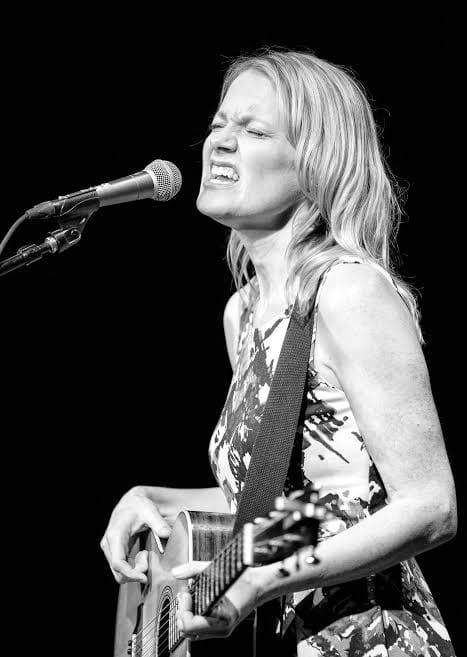
I was invited to give a presentation at the Dallas Public Library last weekend (which I obviously accepted with enthusiasm, because the library is the best!) on the topic of women in Texas country music (or Texas women in country music, or some other combination of those words…). With 90 minutes to give some substantial sense of a topic that could easily consume hours, I tried to share some crucial names as well as concepts that shape the way I think about "Texas country" (as well as country music as a whole). It was a very fun exercise, although of course I ran out of time before I even got to talking about Maren/Kacey/Mickey (!).
I tried to loosely organize around the themes of Western swing, outlaw country and red dirt — three sort of primary arcs/eras of ~Texas country~. One attendee asked (understandably) what defined outlaw country as a genre, aesthetically, at which point I was compelled to give up the big secret about outlaw and even red dirt and Americana: they don't really have much as far as unifying aesthetics go. You can argue for outlaw as traditional, or rock n' roll, or singer-songwriter focused, but it's generally defined by what it's not rather than what it is (and even then, it…was many of the things that it supposedly wasn't). Theoretically, it was the music made by artists who felt constrained by Nashville's studio system; nevermind that most of it was still made within that very system.
Those loose definitions and wide tents around "outsider" country music — no matter what era or term you attach to them — would seem to make them more inclusive. Especially with outlaw and Americana, they tend to get a progressive gloss simply by virtue of the assumed conservatism of what they're reacting to: the Nashville establishment and Music Row.
Yet few women get assigned the "outlaw" or "red dirt" descriptors; you have your token Jessi Colter, and even an icon like Emmylou Harris tends to get sidelined as some secret third thing. In Americana, rampant gender inequity gets considerably less attention than it does on country radio. Women, perennially on the outside, still aren't the right kind of outsider to be celebrated for going against the grain.
Especially as I got to the "red dirt" section of my presentation, encompassing music more or less from the '90s through today, the dissonance of this broad genre and the near-total exclusion of women felt particularly acute. We talked about Rosie Flores and Kelly Willis and Sunny Sweeney, the Chicks (obviously), Lee Ann Womack and Miranda Lambert. They all claim Texas, they all claim a sort of extra Texan grit and truthiness that sets them apart from the Nashville norm.
But red dirt doesn't really claim them, and that's both silly and ultimately can limit the way they're received. There's a community around red dirt, the way that there was a community around the outlaws in Austin in the '70s — a sort of built in infrastructure of acts and venues. Women don't get the automatic cred of being part of that community, of that movement, and instead have to basically fight for an audience on their own; as an individual artist rather than a Texas red dirt artist and all the juice that can come with that.
I'm not suggesting that red dirt is a completely meaningless term, but rather that whatever rules around what it is and isn't are more intensely followed when it comes to women artists; I'm also not suggesting that merely attaching yourself to the term red dirt is a short cut to success (far from it), but that there's a certain caché and community of listeners that go along with being accepted under that umbrella. If you think I don't know what I'm talking about, just consider how many women country artists Billy Bob's has headlining per annum (like 3).
It's not a new story; we talk about boy's clubs in all kinds of different milieu. But if we want to move past lumping together lists of women artists on the basis of their gender, we have to start including them in other groups — among their musical peers, in real time, not as unsung heroes or forgotten legends. And that's a process that starts with men.