From the Archives: An Interview with Josh Abbott

Over the past few months, I've been really enjoying sharing some archival interviews from woman I spoke with for my book Her Country, which will finally be available in the UK this fall, on Omnibus Press. You can preorder a copy here, which has a new cover, extended playlist and updated epilogue. So far, the interviews have all been from women - but not today. Josh Abbott of the Josh Abbott Band was one of my favorite sources - and, to be honest, is a man with pretty impeccable taste when it comes to duets. He sung a newsletter favorite, "Oh, Tonight," with Kacey Musgraves, and has also sung with Carly Pearce, Catie Offerman and other incredibly talented women. He was great to talk to about Kacey's early days in Texas, Carly and more. Hope you enjoy it!
Marissa: You have an impeccable record when it comes to collaborating with talent, even before others catch on. Is it something that stands out right away? (Note: after this interview, Josh would message me from time to time with women he was listening to that he thought I should check out. One of them? A still-unknown Ella Langley!).
Josh: There's something about that extra level of talent – when you see it, it doesn't matter if they're famous or not. Carly Pearce, I always told her was that she was celestial, that she was a star. The only reason the labels couldn't see it was because they just didn't have the right telescope. But that didn't take away from the fact that she was a star. Someone just needed the right capability and lens to see it. And eventually, someone did. She got her record deal after living in Nashville for about eight years and busting her ass to get one.
With Kacey, there was no way to forecast what she would become. To me, Kacey isn't just a star or a legend -- she's an icon. I think Kacey Musgraves is in the same class as Dolly Parton and Loretta Lynn. There's something about her and the context in which she's risen. One of Kacey's great stories is empathy -- how she really wants to be a voice for people who may not have a voice. It was so bold of her to put "Follow Your Arrow" out and insist that her label take it to radio stations. That's just such a key characteristic of the star she's become, because it's just so easy to root for her. People want her to succeed. It was just a matter of her getting in front of people.
It's funny – people always say, "Man, that's crazy that you helped Musgraves get her start." And I'm like, no, I really didn't. Everything she's accomplished is because she's just so talented, such a good singer, has this glowing kind of vibe, and is such a hooky songwriter. What also helped her in Nashville was getting networked really early – Shane McAnally, Josh Osborne, those people she wrote with very frequently in the very beginning and even still to this day.
Marissa: How did you first meet Kacey?
Josh: I was in grad school at Texas Tech and had just released this four-song demo – it's still up today, and it sounds pretty rough going back and listening to it, but at the time me and all my friends thought it was pretty cool. We started getting popular, and I signed a booking agency deal with a Texas regional company that helped me get my foot in all these college towns and small bars. And there was a girl answering the phones there. Her name was Kacey. Now, here's some context that makes this story so beautiful: at that time, MySpace was everything. That was the medium for people under about 25 to discover and engage with music. And if you were in somebody's Top 8 friends, you were the real deal.
So I was listening to Miranda Lambert and checking out her MySpace, and one of her top friends was a girl named Kacey Musgraves. I'd never heard of her before, so I started listening. And I really loved the hell out of her voice. There was just something so magnetic and charming and honest, if that's a word I can use to describe a voice. She had some solid originals – I think she's since deleted them from existence, I don't think you can find them now – but she also had this really cool cover of "Heart of Gold" where she even played harmonica. I was like, man, this girl is really good.
So I was talking to my agent one day and I said, "Man, I think I found a girl you need to sign." He was like, okay, who is it? And I said, "Her name's Kacey Musgraves." He sort of brushed it off and said, "Did she put you up to this?" I was like, "what do you mean – I found her on Miranda Lambert's page, there's something really great about her voice and I think it's worth looking into." And he said, "Dude, Kacey Musgraves is the girl that answers the phones here."
I was like, "the girl I always talk to before you get on the line?" He said yes. So from then on, every time I'd call up there, I'd talk to Kacey before I'd get to my manger. We'd chat about our day and all that. Then fast forward to 2009: we'd recorded all the songs for the She's Like Texas album, except I felt like we needed one more. My fiddle player said, "What about that duet you wrote back in college called 'Oh, Tonight'?" I thought it was a pretty cool song, so we laid it down. And once we recorded it, I just knew Musgraves was the voice for it. It didn't bother me that she wasn't a big name – we were still just getting our footing in Texas country. I wasn't trying to find some huge name. I just thought, let's grab the person who makes the most sense. She's our friend, she's amazing, she's super cool. So I called Kacey and asked her to do it, and she was so gracious about it. She even sang harmonies on three or four other songs on that album.
So we released the record in 2010, the title track did really well, and then going into 2011 there was another song that was just crushing it at live shows and on iTunes: "Oh Tonight." Even though it was never in our plans to be a radio single – it barely made the album, honestly – we put it out to Texas country. And then it gets really bizarre. Mainstream stations started playing it. Texas country is kind of its own format – these radio stations in Texas that play that genre almost like their own thing, and the mainstream Nashville-sound stations don't really touch it. But all of a sudden a station in San Antonio started playing it and it started blowing up, literally becoming the number one request there. So we hired a radio promoter, and the next thing we know we're getting radio play in Oklahoma City, Houston, Phoenix. I remember thinking, what the hell, we're gonna need a label, and I don't even live in Nashville.
It ended up charting in the low 40s nationally. Now, that's not normally something to brag about, but when you consider the fact that it was two unsigned, no-name artists with one radio promoter and no clear vision of actually taking it to the national chart, charting at all on that thing is so freaking hard. I look back on that now with total disbelief. And I tell people that I genuinely think it happened because of Kacey. I think even before radio knew her voice or her name, they heard "it." There was something engaging about her voice with mine. I probably owe her, honestly – I don't know that song is as popular without her amazing voice on it. And that song really helped set up our career. A lot of dominoes fell in the right place because of "Oh, Tonight."
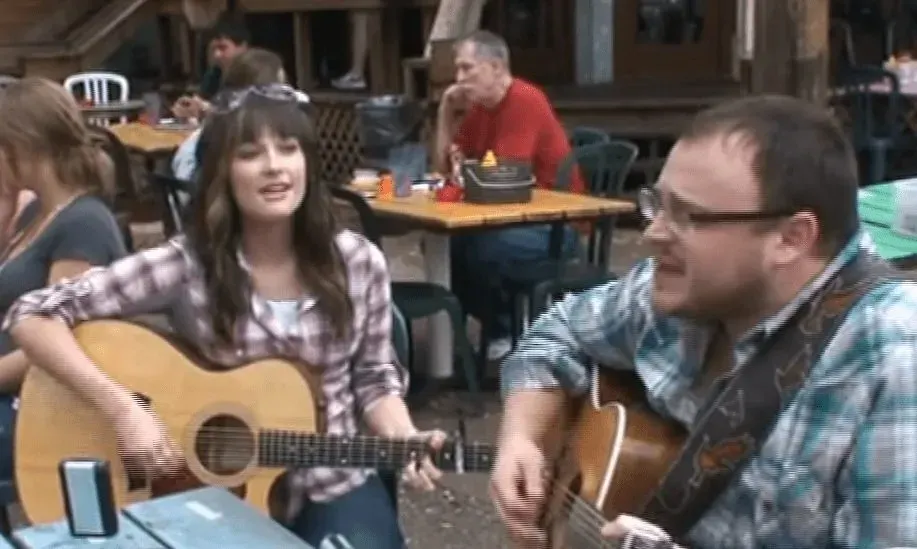
We had a lot of fun with that -- toured a lot together, there are tons of pictures, there's this really cool YouTube video of us singing the song at this place in Austin that certainly doesn't exist anymore.
Marissa: Freddies?
Josh: Yes! We both joke about that video because we hate it. We didn't have stylists, we didn't even really know what our style was yet. We both look like an ad for... I don't know, some questionable establishment. And I'm wearing my frickin' glasses. Someone should have said, hey, just in case you're a little more famous one day, maybe take those off. But I just didn't think like that at the time. It's kind of cringe-worthy to watch, but also fun.
We did really well touring across Texas and a few other states, and the song caught the attention of a promoter in France who offered us to come play his country festival. My manager also had some connections with a local promoter in Italy who could get us a couple more gigs. When you're that young in your career, all you want is opportunity. So we went over to Europe. Kacey brought her sister – we covered their expenses, and her sister did some photography for us. She's now a really, really emerging photographer in her own right. I made sure that in all our interviews over there, Kacey did them with me. She was so gracious and fun answering questions from these French reporters.
We went to this one town and got the key to the city, which was just crazy. Then we were in Italy playing this small village festival – everyone comes together, all the women of the village make the pasta, the men do their thing, and it's this huge city-wide potluck kind of deal. Our fancy stage was on a tennis court. No green room, just a little building with some bathrooms. So Kacey and her sister were in there chilling, and she started playing me some of her songs. I had heard some of them already, but the big thing she was wrestling with at that moment was this song called "Mama's Broken Heart." She really loved it and wanted to hold on to it. But she had signed a publishing deal in Nashville and had the opportunity to have Miranda Lambert cut it, so she felt the pressure of, I probably should do this – it would be really selfish of me to pass up a cut by Miranda just because I want to hold on to it for my own career. Obviously that ended up being a big hit for Miranda and another stepping stone for Kacey.
She also played me "Merry Go Round" in that bathroom in Italy. I was like, oh my God. I don't think I've ever written a song as good as that. So I think early on, she really knew who she was as an artist. For her to be such a young artist and write a song like "Merry Go Round" is just such a statement.
Marissa: Were you at all nervous about the idea of her releasing and pushing for a song like "Follow Your Arrow"?
Josh: No, I thought it was great. It felt like she had some leverage. She had recorded a great album, and there's this other song she sent me early on – "It Is What It Is" – she wrote that pretty early in her career. And then there's a song she released years later called "Trailer Song," which she wrote back in September of 2011. A lot of her early stuff she had written years before it ever came out. I think she really did know what she wanted. Going back to the empathy thing – she was putting out a song that said, I don't care if this goes against the traditional sound that circulates on mainstream radio. This is the song I want to put out as a young artist to represent who I am and what I'm about. She didn't care if it was number one or top 10. She wanted stations to play it because she wanted the LGBTQ community to hear it. I just thought that was super cool, and that song is awesome.
Marissa: When you guys were on the road and when you recorded that song, was it always clear that she was committed to her own vision and her own way of doing things artistically?
Josh: For sure. I think she knew who she was. I don't remember exactly when she signed a record deal, but I know we toured Europe in August of 2011, and that's the same time she was writing those songs. She knew the kind of songs she wanted to sing and the story she wanted to tell.
Marissa: And then there's Carly Pearce.
Josh: I saw Carly play acoustic at this thing in Nashville called Whiskey Jam. It's been around for a while – kind of the thing to do for everyone under a certain level of success in Nashville. I was there one night, I think it was 2012 or 2013, and I saw this girl, Carly Pearce. I texted the guy who runs the event afterward and said, that girl with those songs – can you put me in touch with her? I got her email and we emailed back and forth. I still have those emails, which is so cool to go back and read. I just wrote to her like, hey, I heard you play the other night, I love your voice and your style and I think there's something special there, just wanted to introduce myself. She would send me songs here and there.
Then in 2015, here's a great story. We were signed to Atlantic and Warner at the time – it was a kind of split venture between them. We'd already put one song to radio and it didn't even chart, so we were all scrambling and looking for what to follow that up with. My management team came across this song called "Wasn't That Drunk," written by three young writers in Nashville who have all gone on to do some really cool things. Lady Antebellum had had it on hold and decided not to record it, which is how it became available. I knew immediately, without a shadow of a doubt: this song was meant for Carly Pearce. That's the voice I hear on this.
So I told the record label. At the time, Carly had been around Nashville for probably five years. I think she even had a development deal with one of the majors, and then got dropped when the administration changed -- that whole thing. So there was kind of an "up and out, nothing special here" vibe that the record labels in Nashville had about Carly. And I got into actual arguments with my label about it. I said, look, why don't you sign Carly Pearce, let's put this duet out and take it to radio, we'll radio-tour together, and you'll be the first label to break two artists on a duet. You're getting two for one on your budget -- her going out with me and meeting radio people, she can promote her own stuff while we promote ours. I literally argued with them, and they just didn't want to do it. They just didn't think she was a star. Those were their literal words.
So they dropped me in May of 2015. But the good news was that as part of my deal, we got the masters to the song. So I called Carly and said, hey, I'd really like you to sing this duet with me. I know we haven't really talked in a while and we don't even know each other that well, but I just think you're the voice of this song. And she was super cool about it – said, let me hear it. And then she was like, oh my gosh, I'm actually friends with two of the songwriters, I've been hearing this song at open mic nights and songwriter rounds for a year and I love it, it would be so cool to do this. So she did. And we both knew immediately it was a hit.
We released it in November of 2015 and pushed it to radio in 2016. And that's actually the only song we've ever had chart on the national charts – "Wasn't That Drunk" went to like 36, which was huge for us. We went on late night TV – my late night debut is the same as hers, going on Jimmy Kimmel. We got to travel the country and visit radio stations together. And going back to what I said about Kacey – the same thing was true with Carly. I could almost see it in the eyes of the program directors. Program directors can be hard to impress because they do this every single week with artist after artist. But when she would sing, I literally watched their faces change, like, oh, there it is. Even though she didn't have the name, she had the talent. You don't need to know a pitcher's name to know they're throwing a hundred miles an hour. You know they're good. And then you learn their name. I think it's the same thing with certain voices – there's just something magical there, something really deep that resonates. Her range was incredible, there was something soulful about it.
She ended up signing her record deal. To stick it out in Nashville for eight years, while her friends are getting record deals and blowing up – Kelsea Ballerini, Maren Morris, people she was best friends with and running around with – watching them land record deals and succeed while she felt like she had the talent but not the opportunity. And then finally the opportunity came.
I tell young artists that story all the time. You have to keep on believing, no matter what. It isn't confidence if you stop believing. If you have that special talent, whether it's three years or ten years, someone will see it. To bring it back full circle to what I said at the beginning – I told Carly she was celestial, she was a star. For some reason I was one of the few with the right telescope to see it. But it wouldn't take long for everyone to see it. And now she's a bona fide star.