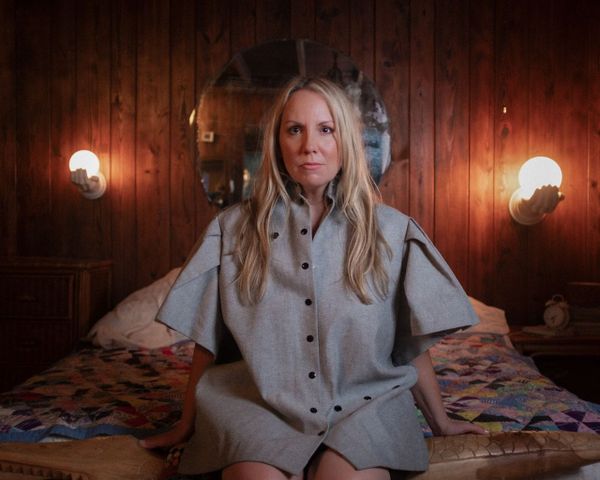
From the Archives: An Interview with Natalie Hemby

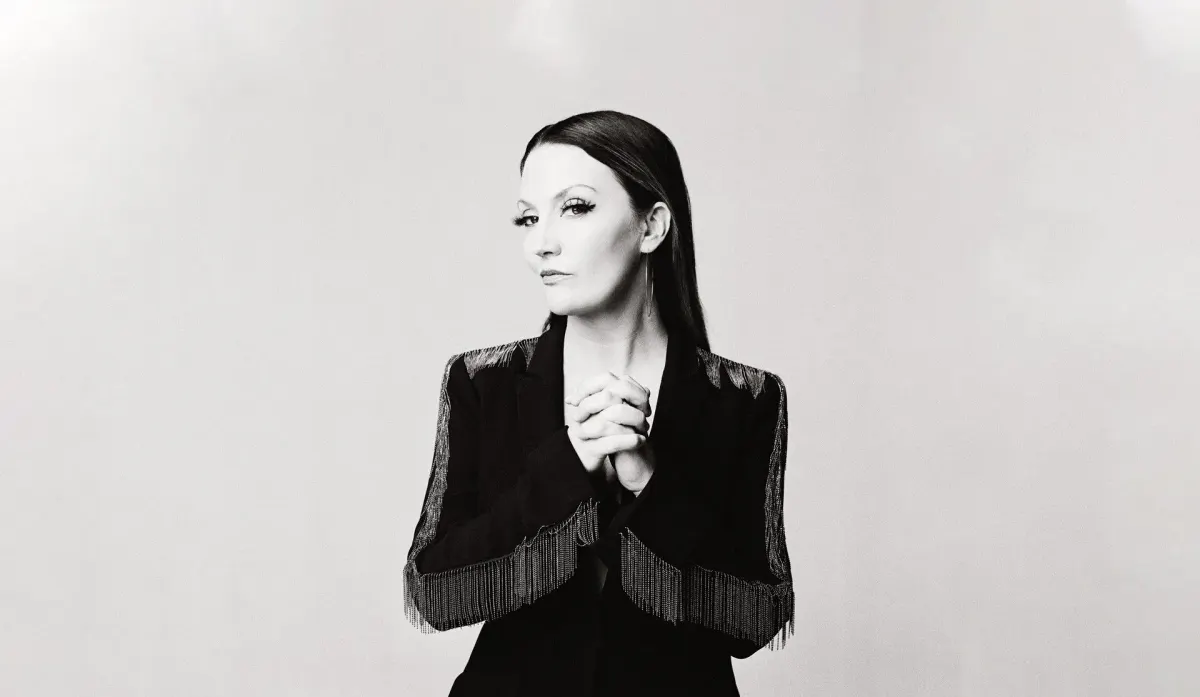
Happy dogs days of summer to you all (or "fuck are my kids going back to school summer," whatever you celebrate). Some fun international news from me: as I mentioned last month, my book Her Country will be available in the UK this fall, on Omnibus Press. You can preorder a copy here, which has a new cover, extended playlist and updated epilogue. I'm really excited for you folks across the pond to have your own edition, even if it is a few years late!
But while I was preparing the new edition, it occurred to me that I had a huge backlog of interviews just sitting there on my hard drive, full of country music gold - so in the spirit of the UK release, I figured it might be fun to bring you a series of these special chats, because so little ends up making it into the final manuscript. I started with Patty Griffin, and now, here's one with Natalie Hemby, one of the greatest songwriters we have (yes I voted for her in my NYT ballot) - she goes long on her origin story, and I love hearing the roads that led her to be the superstar force she is now. Songwriter, Highwoman, solo artist, mother, legend in the making. Enjoy!
Marissa: Let's start at the beginning: take me through your origin story.
Natalie: I grew up in a musical family. I grew up around Christian music, and I watched Amy Grant and learned a lot of things about how she operated with people. She was a very gracious artist - not so much a rock star, but more the kind of person who made everybody feel like they knew her. Almost like a Taylor Swift approach. This was during her pop crossover days. I grew up in Nashville, but I was not into country music per se. I loved Dolly Parton and Johnny Cash, but I didn't buy those records because it all felt so familiar - it was so in front of my face that I was looking for other things. Amy Grant was somebody I always looked up to because of how gracious she was. But when she got divorced and started spending time with Vince Gill, I actually started listening to more country music. I started listening to his records and meeting more people in the country industry. I got into Garth Brooks, Martina, and especially the Judds. I loved the Judds.
But when I was around 19, I wanted to be an artist. I wanted to be like the women on rock radio at the time - Sheryl Crow - that was the path I wanted. I actually almost got a record deal, but it fell apart at the last minute. It was a hard time because the whole landscape was changing. Trying to get a record deal meant it wasn't just about radio anymore. It was the dawning of the Britney Spears era, the Disney Channel pop artists, and rock radio was slowly fizzling. Then you had to deal with Napster and people stealing music on CDs and all that. And Jay Joyce was going to do my record. I've known Jay for over 20 years. He had just finished Patty Griffin's Flaming Red, which I was a huge fan of. But the company folded and I didn't get that big record deal. It was a blessing in disguise. So I just started writing.
The way I kind of entered the scene was this: maybe I couldn't write the really great big pop country songs, but what I could do was sing them in the studio. I sang on thousands of demos. The only one I know of that got cut was a Trisha Yearwood song called "I Would Have Loved You Anyway" - that was me singing the demo. It was a big single for her. What I did was cut my teeth in the studio listening to all these songs and learning how to sing for country music. I started writing more toward pop country - or it was still just country at the time, not really pop yet - but the big ballads, and I got thousands of holds and nothing ever broke through.
Long story short, I got married and we moved to LA for a while because I thought I was supposed to be there. I hated living in LA. I love going there to write but I hated living there. We came home three months later. Nashville is just a small town in a big dress. That's how I felt about it for years. And then when I went to LA and came home, like George Bailey in It's a Wonderful Life, I was like, oh my god, I love this place. I love the studios, I love the players. My attitude completely changed.
During that time, I also needed a job, so I worked at Comcast for a while for the health insurance. But my husband started producing - he was working with Miranda Lambert, who was the second runner-up on Nashville Star, and I was like, gosh, she's really good. I love her songs. Her first three records - that is my voice all over them. Those backgrounds on Kerosene, that's me with her. And from singing so many demos and staying in the studio, I sort of learned the voicing of a country female artist in my own way.
So we started working with her, but it wasn't until her third record that I got to write with her. I never pressured her - she'd say, hey, we should write, and I'd just say, look, if you're serious, I have a list of ideas I'd love to run past you. I literally have ideas for days. Finally we did it, and four songs made the Revolution record. And from there it's like my life just took off.
The weird part is, because I live here and I'm from here and I know a lot of people, I've been involved with a lot of people's careers from the very beginning, when they first rolled into town. I think that's probably one of the big advantages of being here. I live in a town where people move to and then move away from Nashville. It's kind of interesting to stick around and see what comes full circle. Miranda and Kacey grew up in the same town, their families knew each other, and that's kind of how I met Kacey. And then Maren was friends with Kacey and moved to town. There's just this little thread running through all of it.
Marissa: Do you remember the first time you met Miranda and when it all kicked off?
Natalie: Yeah. My husband Mike brought home Kerosene and played it for me downstairs, and I was like, this is really, really good. And so they wanted me to sing on her record. Then we played CMA Fest - Fanfare, out at the river stage. During the day it's hot as hell, and Miranda comes up with ripped jeans and a T-shirt and she's like, 'oh my god, I love your voice.' And I'm like, 'I love your voice.' So we got on this golf cart and she tells me she just got a Hollister deal and she was so excited about it. This is young Miranda. I said, that's awesome, I can't fit in their clothes, but that's awesome. And then she said, I just did this interview and they asked me what my favorite things were, and I said bird dogs and Merle Haggard. That's Miranda. This was probably 2003 or 2004.
Marissa: Was it love at first sight for you two after that?
Natalie: You know, she's the same age as my sister - literally the same birthday - and there are so many things about them that remind me of each other. They're both feisty as hell and they do not give a shit what anybody thinks. Miranda's always been that way. She's a very intimidating person in the sense that she's just a spitfire. But growing up listening to artists like Alanis Morissette, rock artists who were just in your face about things, I loved Miranda for it. Gretchen Wilson had come out at the time and Gretchen was kicking ass, but Miranda was a different kind of in-your-face. Gretchen's like your buddy - I mean, she could probably kick your ass in a bar. Miranda would just secretly burn down your house. Two different things, you know? But Miranda - at that time, Gretchen was really the only one on radio doing that balls-to-the-wall I-don't-give-a-shit music. What I think makes Miranda win over everybody though is she can do both. She writes songs about how she's been wronged, or how she's messed up, or about tearing it up, from all perspectives. She's just unabashedly herself. Doesn't have a one-sided view, which is really nice to write to.
I was actually talking to Tracy Gershon about this story - when Miranda first walked in to get her record deal, she was basically like, this is who I'm going to write with, this is who's going to produce my album, take it or leave it.
It's not all roses, though. It's a really hard business to be in and to make a living in, and I've almost quit I don't know how many times. Sometimes I'm kicking ass and I still want to quit. It's a lot to try to navigate and still be a good person. One little misstep and it can all come crumbling apart.
Marissa: Do you remember the first time you met Kacey?
Natalie: I do. I met her in a kind of a funny way. I met her at a songwriters festival down on 30A. She looked super cute, all dressed up, and she had written this song called "There's a Person There" – I think Lee Ann Womack had cut it, I can't remember exactly. But I was like, this is an amazing song, I want to meet this girl. So we met down there and we wrote together. From day one I just loved her because she was funny, kind of guarded at first, she doesn't show her cards right away. But when you get to know her, she's very much for the underdog. We just hit it off. We talked about tequila, talked about our families, about songwriting. The first song we ever wrote together was called "Take Mine" - it was basically a song about, if you want all these crazy expensive treasures, well, you can just have all mine. Which is hilarious because we were probably two broke people writing from a rich person's point of view at the time.
We've always gotten along and written well together. We wrote "Good Ol’ Boys Club" together - that was a lot of fun, we went to Texas to write that. It was me, her, and Luke Laird, and we were outside and we just didn't really hold back. That's what I love about all these women - they don't hold back from what they want to say. Writing with them is more refreshing than writing with some guys in town, because I'll hear a guy say, well, I don't know if radio would play that. But the women I work with, they just want to say it like it is. And I love that Luke Laird wrote that song with us - there's something perfect about that, a dude in the room, and he's obviously one of the good ones.
2013 was actually not a great year for me personally - we were trying to move and had a nightmare of a house situation going on. So in the middle of all that, Kacey and I wrote "Rainbow." She sent it out a few times, but she was doing Pageant Material at the time, and to be fair, it really didn't fit on that record. Then when she started writing songs for Golden Hour, she was working a lot with Daniel Tashian, and they said, do you have any other songs? And she said, well, I have this one I wrote a long time ago. And she played it for them and they were like, oh my gosh, this is going on the record. It was perfect timing. The timing of songs is so important – the timing of the song, the timing of the world, the timing of everything.
I love that it's the last song on the record, because that's my favorite position on an album. It wasn't like a smash radio hit, but I've seen so many people cover it. I've seen so many people send me messages of themselves singing it. She sang it with Chris Martin in South Africa. There have been some really big moments with that song. But to me, the biggest was when she played Bridgestone and the whole arena held up rainbow lights. If that doesn't bring tears to your eyes, I don't know what will. I was sobbing.
Marissa: There's something about those Texas women…
Natalie: Really think about it - Miranda, Maren, and Kacey. They're all free spirits. They're almost incapable of lying about who they are as artists. They can't help it. They don't know any other way than to be themselves, even if it's uncomfortable for everybody else. There's something growing down there in Texas, I swear. Strong women who know what they want. And I'm not saying if you're not from Texas you're not that way - I'm just noticing a trend. They're all three forces of nature.
And here's an interesting thing about how all these pieces connect. Maren grew up playing Texas clubs, tried out for The Voice and didn't even get on. And here she is, a huge star. She's probably one of the first I can think of who's massive and didn't go through the reality TV pipeline. Maren's parents drove her to bars to play. Miranda's parents did. Kacey's parents did. There's something to be said for all those young years playing at the mall, at the little dive bars in the middle of America, where you can just sing and mess up and learn and try to figure out who you are as an artist.