What Do You Do When You're Lonesome?

I've probably told this story here before, but the man that really drew us to Nashville was Justin Townes Earle. We'd come to visit during a now-defunct music festival called Soundland, and Justin was playing in a small room off the Korean Veterans Boulevard roundabout, mostly for journalists and industry folks stopping by to pick up their badges for the weekend (come to think of it, was it even a roundabout back then?). We'd seen him before in New York, but something about this moment - Justin, plucking his heavy thumbs on strings in a city where you could still find free street parking, full of people just chasing after the song - felt like a moment that we couldn't resist being a part of.
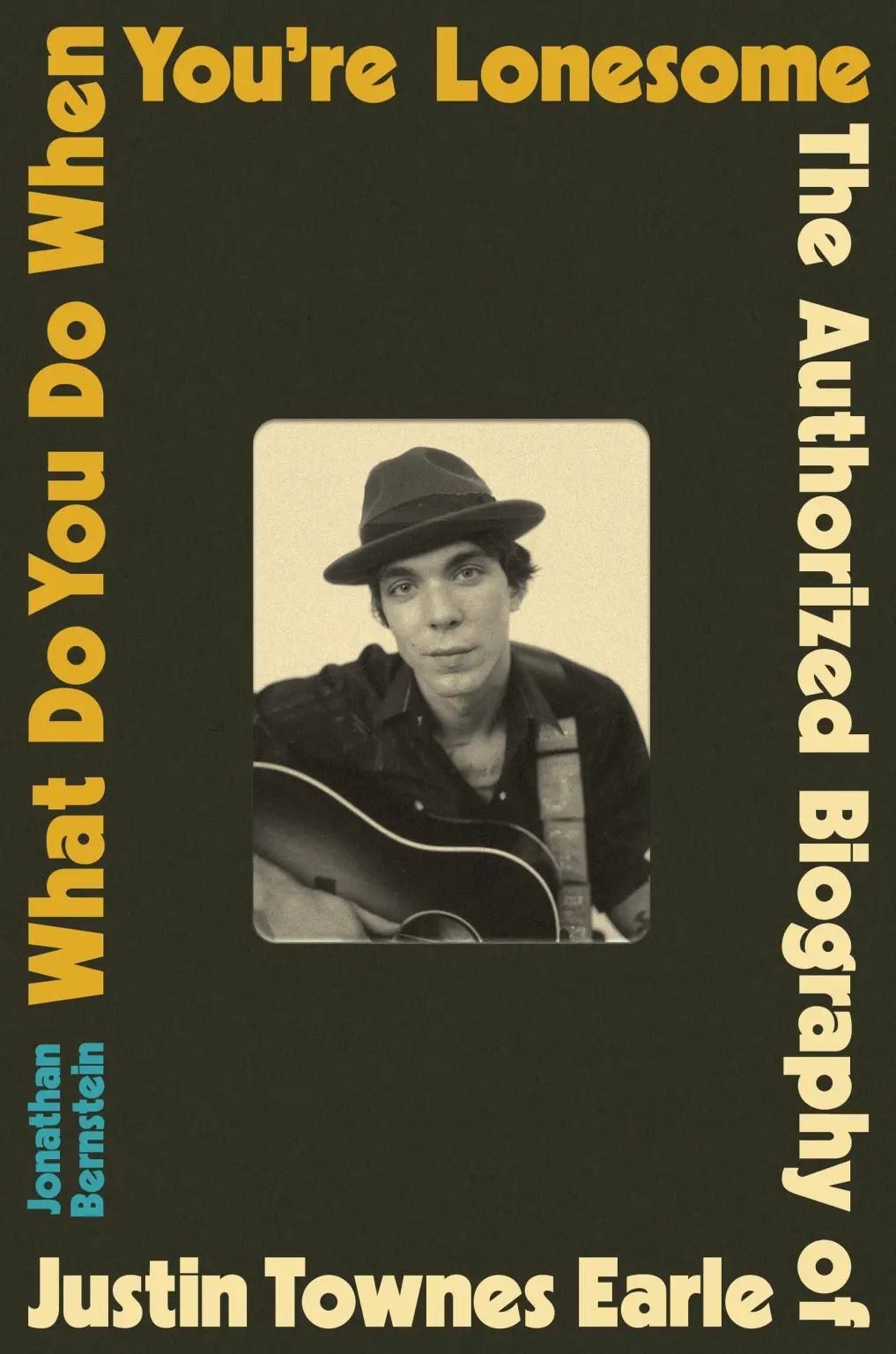
What Do You Do When You're Lonesome, a new fully authorized biography by Jonathan Bernstein, captures the magnetic brilliance of Justin Townes Earle, and the rich, artistic world of a growing Nashville that he helped create - one that would eventually, after becoming infatuated with bachelorettes and TikTok stars, leave him behind. When he died in 2020, Jonathan wrote a beautiful, compassionate but honest piece for Rolling Stone, that left him feeling as though there was so much more of a story to tell. He was right: What Do You Do When You're Lonesome is a meticulously researched, vibrant portrait of an artist that pulls no punches when talking about the addiction and mental illness that plagued Justin's life and the "myth" of the struggling, tormented artist that he was aware enough of to deconstruct but could never quite escape. You can purchase the book here - I cannot recommend it enough, whether you were a longtime Justin fan, new to his work or just interested in the complex struggles of a creative life. It also digs deep into so many of the artists that surrounded Justin and were influenced by him - names both on marquees and at risk of being forgotten completely.
Back in January, I was lucky enough to join Jonathan at Grimey's, a place and community very special to Justin Townes Earle, to celebrate the book release with a conversation and performance. Below is an edited and condensed version of that conversation.
"I wanted people to understand Justin more," Jonathan said. "The beauty, the light, and the dark.
Marissa: Can you tell us about the first time you saw Justin Townes Earle play a live show, and what that ignited inside of you?
Jonathan: The first time I saw Justin play, I was 19 years old, a sophomore in college in Minnesota. I may have used a fake ID to get into the club that night, since it was 21-plus. Justin Townes Earle was opening for Jason Isbell and the 400 Unit. It was April 2009, about a hundred people there, just Justin and Corey. Midnight at the Movies had just come out, and I had very little context for what I was about to see. I was blown away. It was the era when Justin was really doing his medicine show salesman, Grand Ole Opry, talking-ten-miles-a-minute act. He covered "Can't Hardly Wait," played all of Midnight at the Movies. "Mama's Eyes" was the song that truly hooked me. From then on out I just started seeing him every time I could.
Justin functioned as a gateway for a lot of people: into Americana, into country. Can you talk about giving Justin his flowers for his place in shaping so much of this music?
On a personal level, Justin introduced me to so many artists. The first time I saw Jessica Lea Mayfield perform, she was opening for Justin. Justin wasn't living in Nashville at that time, but to me, and probably to a lot of fans who didn't know any better, he kind of represented what seemed so exciting about so many musicians making records in the late 2000s and early 2010s. He was my portal into all of that. I was really excited to tell Justin's life story, but I also viewed this as an opportunity to show, on a larger scale, how Justin is truly an under-acknowledged influence on so much of what's happening today. Both Sierra Ferrell and Charley Crockett cover "Harlem River Blues." I think you can draw the connections for just about anyone making music today in the Americana space. He was, in many ways, just ahead of his time commercially, and also pretty good at self-sabotaging artistically. So this felt like a necessary opportunity to show that without screaming about it in the book.
This book started to come together after you wrote a wonderful Rolling Stone piece about Justin after his death. Talk to me about how that transitioned into this project – I know you spoke with his wife early on.
I was a huge fan of Justin basically for his entire solo career, and I was shocked at how affected I was by his passing in 2020. I spent the fall of 2020 getting to know his bandmates, his loved ones, his people for the Rolling Stone story. When I finished that piece, I basically realized it felt like I knew less about him than when I had started, and it felt so unlike anything I'd ever written before, so much like a starting point rather than an end result. That made me so confident there was so much more to say about his life, his art, and the community and city he came from.
Going into this project, you had some difficult topics to navigate and complex relationships to handle. How did you make a working plan to deal with those hurdles and achieve that balance of being truthful and fair while also approaching it with heart?
It was challenging. Some people in this room warned me at the onset and I didn't really know what they were talking about. I now do. I had a few guiding lights for myself. One was to write a book that was honest, because I felt a book that papered over some of the heartbreak of Justin's life was frankly probably not worth writing. And I wanted to write a book that was empathetic, because Justin was a beautiful human being and this was a huge responsibility, to tell the story of his life in a semi-permanent way. I wanted people to understand Justin more: the beauty, the light, and the dark. And it was really important to me to write a book that was simultaneously honest and unsparing about some of the darkness, but that also didn't romanticize or glamorize his suffering. Those few things I just kept telling myself whenever really difficult stuff came up. Figuring out what to include and not include was not always straightforward or easy, but those were always the things I kept in mind.
You tell such a vivid picture of Justin's early days in Nashville — the streets where he grew up, the very specific places and people. How did you go about putting all of that together?
Like I said, I was a big fan of Justin. I had read most of the big interviews he'd given in his career. Justin, like many great artists, tended to talk about himself and his career as the story of a great man going on to do great things, which he did. But he hardly ever talked about where he was from in a community context. So from the minute I started working on the Rolling Stone story and began speaking with people like Dustin Welch and the folks in the Swindlers (his teenage band), I was immediately excited as a music journalist at the opportunity to tell a story that just hadn't really been told. Dustin first started talking to me about his backyard hangout where all these future stars of Americana were passing through: Old Crow Medicine Show, Jason, Chris Stapleton, and others. It seemed like a Nashville that, even though it was really only 25 years ago, was past enough to be talked about historically. And it was just such a fun, exciting, untold musical story that I think also really explains where Justin actually came from as an artist.
You write a lot about this idea of "the myth" - the idea that you need to suffer for your art - and you explore how that played out across Justin's life. Is that something you had to deconstruct yourself going into this project? Where do you think Justin landed on it in his life, ultimately?
"The myth" is a phrase Justin came up with and started talking about in interviews after he got sober: this idea that, as he put it, he thought he had to destroy himself in order to make great art when he was younger. It became pretty clear to me that one of the central inner conflicts of Justin's life was his ambivalence about that way of thinking. Whether it was true…I think there were real parts of him that knew it was not, and there were parts of him, specifically when his addictions were taking hold, that felt really uncertain about it. He went back and forth and had a strong ambivalence toward it. Part of the reason I start the book by talking about that is because I went into this trying to tell a story that I hoped didn't further that myth in some ways. And having written the book, it became more complicated for me too, because when you write a story about someone you're inherently glamorizing their life in some way. So it was something I was thinking about a lot in terms of my relationship to telling the story, in the same way that Justin thought about it.
I think it's Johnny Fritz who says, in the book, "you never tell the singer no." A lot comes to mind when you think about that, and how it plays out now in the culture artists exist in. How important do you think it is to keep talking about the more complex issues that Justin weathered, as part of this story?
I think it's very important. It was not my intention to make this a preachy, didactic book about the casualties of the streaming age, though I think Justin was one. And I didn't want to make this a manual about how to deal with mental health in the music industry, though Justin was a real victim of the way the music industry has no idea how to handle mental health. I hope this book sparks an emotional reaction for all the ways in which this industry didn't serve Justin: the ways musicians are not supported in dealing with their mental health, not supported in dealing with their addiction, not supported in their inability to have a stable family life because they need to go out on the road 250 days a year to make money for a young family, which was the case with Justin after he had a child. I hope those elements are things people take from this book and that those conversations continue.
You had full cooperation from the Justin Townes Earle estate, but you also had access to his journals, letters written about him, and his tweets. Talk to me about how you made sense of all those tools in your process.
Justin loved to tell his grand story. We've all heard some version of the beautiful way Justin told the story of his life. It was very interesting to find various versions of that at different degrees of privacy and filtering. Justin's Twitter was very unfiltered, for better and for worse, very spur-of-the-moment and honest, and as a researcher it was an incredibly important tool for seeing how he was publicly diarying every day over many years. His lyrics and journals were of course an eye-opening window into his creative process. But the few moments where Justin wrote about his life and reflected in private were probably the most revelatory things I came across, because he talked about his life and career and art in a very different way than he did publicly.
Can you give an example of what you mean by that: how he came across differently in private writing?
Sure. Justin was a real braggadocio kind of person in many ways, a lot of bravado. But he has these writings in his journals where he talked about how luck and being in the right place at the right time is 95% of success in the music industry, and how grateful he was for having grown up in Nashville when he did. He really viewed himself as a total product of fortune. To me that felt so honest and raw, and less sexy than the way Justin talked about his life in interviews. Less fun, but a lot more true.
Purchase What Do You Do When You're Lonesome here.