Sunny War: The DRTI Interview

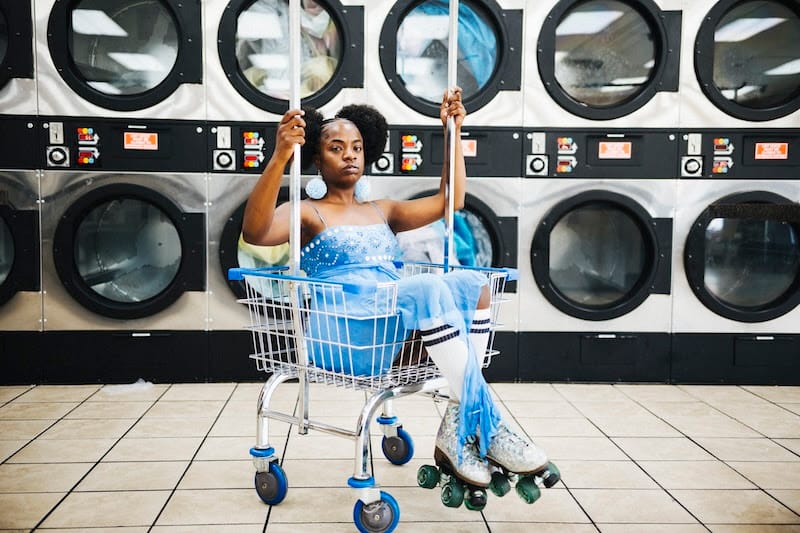
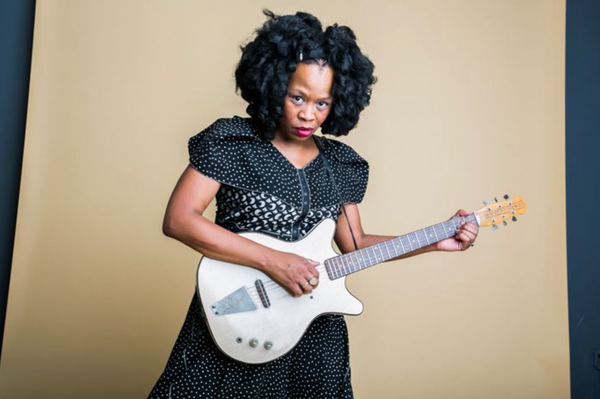
I'm a broken record in this newsletter sometimes, but some things are worth repeating: as much as everything is on fire, people persist in making wonderful art that diverts, inspires and provokes — just as they continue to do work to push for better even when it feels overwhelmingly futile. The Fort Worth African American Roots Music Festival, or FWAAMFest as it's known, is a crucial reminder of both truths. I've covered it before, and it's happening again this weekend (North Texans, don't miss it!!), with headliners including Buffalo Nichols, Martha Redbone, and Sunny War, who graciously agreed to speak with me ahead of her appearance at the festival.
I got to see Sunny for the first time at Big Ears — another festival making good on some do-gooder vibes — last year, and she and her band were just fantastic, turning me into an evangelist for her most recent album Armageddon In A Summer Dress (how do you top that name) and her work as a whole.
Our conversation will launch a DRTI miniseries on "protest music" — scare quotes because I think music that engages meaningfully and explicitly with our material reality is often viewed as kind of…trivial by critics and listeners, somehow less significant for being (sometimes) more literal. Plenty of music intended to convey some kind of political perspective is going viral in our intensely volatile sociopolitical moment, and I get the sense that part of the virality is coming from people finding that combination of music and speaking up novel. But it shouldn't be! Great artists have been expressing their discontents forever, and so I'm aiming to spotlight some of those who inspire me with their eloquence, artistry and bravery. Without further ado, Sunny (and get out to FWAAMFest this weekend!).
NW: I'm thinking about "protest music" or "political music" basically as music that's aware of its place in the world. What was your kind of "political music" awakening, the moment when you started to see those things as intertwined?
Sunny War: I guess as a teenager when I first started listening to punk music. [At first] I only cared about guitar, because I was learning to play guitar. I got into the Venice, California scene — The Germs and X were lyrically really interesting to me. Then I got into anarcho-punk and Crass. When a teenager hears that type of stuff, they're like, "Yeah, fuck everything." Like, "Finally!" It gives you this charge. But being into those punk bands helped me actually become an activist: going to protests, anti-police brutality marches and stuff. Then, when I was in community college, I took a class about '60s protest movements — it was the easiest thing that I could have taken. [From that] I got into Phil Ochs and I already liked Bob Dylan, but they really got me into all these other people that were writing about Vietnam. I liked finding out that some Joni Mitchell songs are actually really political. So overall, I guess it was punk rock, and then, it got really folksy. But even a lot of blues stuff [I liked] was protest music. Like "Get Back" by Big Bill Broonzy.
It's obviously about segregation. But as a kid, I didn't really hear songs about segregation — that was like, really old music to me. I didn't really listen to blues music until I was like, 15 or something. And before actually listening to finger style blues, I kind of only knew electric blues, and I just associated all of it with, like, singing about being drunk and your woman leaving you. I didn't really go further back, and then [when I did] I was like, "Damn, this is a lot of like, 'I can't find a job…and I'm blind.'" [laughs] My grandma only listened to, like, B.B. King — not that I didn't like B.B. King, I just kind of considered that to be what blues is, like it was all the same thing.
NW: So punk was first, or that was kind of what inspired you to have…an extramusical radical bent.
SW: Well I didn't sing before I listened to punk. I didn't have the idea to write lyrics before that. My dream was just to play guitar in a band. But then I wanted to try to write stuff like Crass.
NW: What was the first song that you wrote that you feel like…reflected a political reality?
SW: I guess with my band Anus Kings, "Predictable Teenage Rebels" was kind about capitalism. I think we were jealous of the mall goth kids. We also had this song called "Police State," which I still play.
 wendy
wendy
 wendy
wendy
NW: I wanted to reach out to artists like yourself, who I admire and who make music that is connected to where we're all at in this moment. I feel like there's sort of this trend of, like, viral protest music, the whole Jesse Welles thing —
SW: I love him.
NW: Personally I have mixed feelings, but why do you love him?
SW: I was listening to him before he blew up, I think they're good songs. But I guess he's really famous on TikTok?
NW: Yeah, that seems to have been how a lot of people have come across his stuff. I feel like a lot of the appeal for people is that they don't think anyone else is making music like that. They're sort of like, "Whoa, somebody's singing songs about things are wrong in the world." I'm like, "No, there are a lot of musicians who make music speaking to various injustices"...
SW: I think he's more really on the nose. Maybe other people are more metaphorical, and then they also have songs about love, so it's like, their whole thing...isn't that. He's just straight up saying it. Like, "OK, I know what this is about."
NW: Yeah, it's very….literal.
SW: It's not a "Strange Fruit" situation [laughs].
NW: Over and over again, you've sort of kind of come back to reflecting just…the world in your music, rather than, as you're saying, kind of sticking to more love song type stuff. Why has it felt important for you to kind of keep returning to songs about the material realities of living right now?
SW: I mean, it's on your mind. A lot of stuff is fear driven. I can get really paranoid, and then writing about stuff is like trying to work through it. Right now, a lot of people I know are thinking like they want to move out of the U.S. They're talking about escaping fascism…that's gonna dominate your mind a little bit [laughs]. Like, shit is just really scary. It's just like your survival instincts, I gotta be in fear a little bit to be safe. But then it brings out another side that's also like, we're all gonna die anyway.
NW: I've noticed that as a theme in your interviews, a very pragmatic approach to mortality.
SW: I think it just helps, because instead of having anxiety attacks about stuff, sometimes you have to be like, "Is my life even that important anyway?" Not that I don't care about people being alive in general. It just sometimes evil stuff is so overwhelming that you can only find peace being like, "Other humans have lived really fucked up lives also." Sometimes maybe it's just not a good round, I don't know.
I also don't think that protest music or protesting does anything. I get the passion, and I appreciate it. I think it's compassionate, but if it's a bunch of war-mongering billionaires...we can't really do anything [that way].
NW: "Walking Contradiction" is the song you have about that, right?
SW: It's like they're just practicing being comrades. All you're doing is saying how you feel, really. It's just a performance. The people that hate us and don't care about our lives aren't going to feel anything when they see you marching with a sign.
 adriansoundchaser
NW: What do you hope people get from listening to your music, then?
SW: I don't know, just to have a nice time. [laughs] I mean, when I listen to political stuff, I think it is just to feel like you're not alone in something. I think that's all it can really be.
NW: I think you're underselling your own impact a little bit — people have to feel like they're in it together in order to do anything that's actually constructive, right? It's really hard to do that on your own.
SW: I think it's impactful for younger people, because the only hope is that, like, everybody now will die and then they'll be the ones at some point in government or whatever. I guess the hope is more in making everybody more compassionate. Hopefully over time, people are just nicer. But the people who have all the money and run everything, it's like, until they're dead…I don't know.
If people were serious and wanted to actually do something like collectively stop paying taxes — I don't know what it would be, but it would have to be such a giant thing and it's just not realistic for everybody to do. Whatever the protest is that would change stuff, it would have to be an action that was like an attack on the oppressor, actually in their money type of shit. Walking around in the street with a sign, it's powerful…it's like, when you see people in a church jumping up and down, like, "Look how passionate they are. Did they take the day off to walk down the street today? Look at them." And then that's all it is. Maybe you see it on the news, "This many people showed up today." And then what? Is there a speech at the end where they're like, "Now we've all agreed that we're not going to do X anymore…" There's gotta be some kind of action.
NW: I know mutual aid work is important to you — how do you keep practicing that?
SW: That's an action, but I also feel like it's just trying to help victims of stuff and not trying to. find a permanent solution. I think I'm just jaded.
The college kids are doing some crazy stuff, though. One group did a benefit show here in Chattanooga that I played at… it was something wild where it was like, "Oh, you guys are taking that on?" They raised like, $3,000. It reminds me that you're supposed to be that. It doesn't fucking matter, they're doing something. It was like, "Let's take down Big Pharma." I was like, "Damn!" I think the college age kids could actually fix everything, because they actually mean that shit. [laughs]
NW: What music is inspiring you right now?
SW: I've just been listening to old stuff…Rodríguez…I do like Jesse Welles, too. Also my friend AC Sapphire. And just a lot of Marvin Gaye. Or I just only listen to rap…the word "inspiring"...Basically just the song "Inner City Blues (Make Me Wanna Holler)" over and over again, because when he says, "The fact is, I can't pay my taxes." I'm like, "Damn, I can't either man." [laughs]
NW: There you go, material conditions creating our artistic reality. Is there anything else on this very broad topic of making music that reflects our society as it is right now, that you feel like people should understand?
SW: I think it's healthy and it can also be unhealthy. Sometimes musicians or artists or whatever, if you're putting yourself in a dark place, then take a break. People forget that. Some people are like, "It's my mission to try to write about this," but then you also have to, like, protect your psyche too. If something feels overwhelming, then take a break. It's okay to be like, "I want to just listen to The Temptations right now." Because that can get really dark sometimes.
It can actually make you sick. I started having panic attacks in the beginning of COVID, because all I was taking in every day was hours of news about police shootings and violence and death. It's like, I had to go take a walk outside for a little while.
See Sunny War on tour now; for more information visit her website here.