Remembering Raul Malo
An homage to a legend of country and beyond.

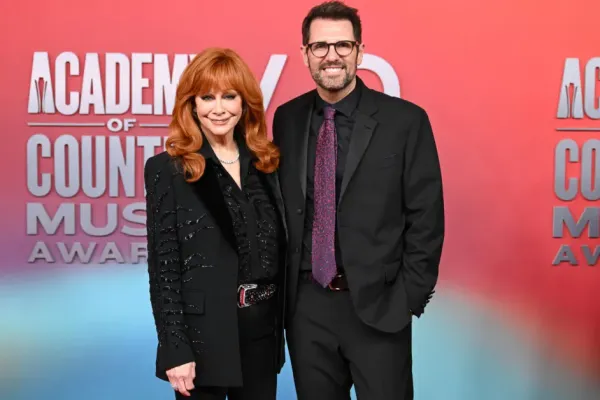
Today we have a guest post from Natalie's husband Jonny, expressing our collective sorrow over the untimely passing of Mavericks frontman Raul Malo. You can read more of Jonny's work at his totally free newsletter about books (and much more), My Time Back - make sure you're subscribed!
I don’t know if it’s hackneyed to ask you to see something through a child’s eye. If you’ve grown up, you’ve seen the world for how ungentle it is, so reading anything described in those terms might feel like dishonesty, but you probably have either a child or a nephew or a niece or a friend with one of those or a memory of childhood, and none of those are liars.
So, I’ll briefly ask you to imagine a very young version of yourself staring at a drain that has been unplugged. You could argue, and maybe this is a stretch, that is the first time many of us witnessed dancing; that little tornado of water spiraling down while the rest of liquid waits to join it. It’s hypnotizing. And then - ZOOP. I don’t know how to spell the word. You might have a better way to describe the sound. The point is that it’s gone. The dancing. The water. The entire experience is just a memory.
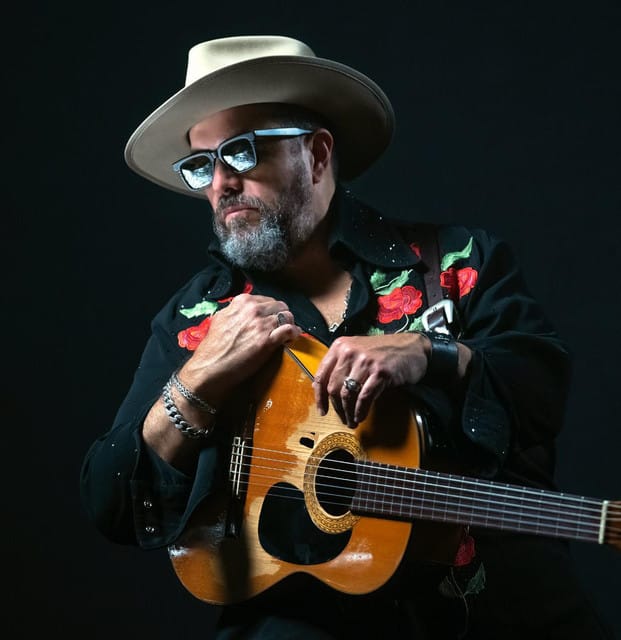
That’s how I process the passing of Raul Malo, the frontman of The Mavericks, the excellent and life-affirming country band, at the age of 60 this week. He was dancing and singing and bringing childlike joy to people until the very end, through stages of colon cancer and surgeries for leptomeningeal disease affecting his brain and spinal cord.
Seven weeks ago, I recommended my friend go see The Mavericks in Kansas City, texting him that they were, “the best live act going.” He responded “This is a must.” The Mavericks canceled that show because of Malo’s health. But I had seen them perform at Willie’s Outlaw Fest just last July. Willie sounded just about every year of his age. Bob Dylan sounded every bit his usual doing his thing for him and not for us. And the Avett Brothers? Well, they had the unenviable task of following The Mavericks, and quite frankly, it was embarrassing in that regard. I went to the bathroom halfway through their set and took my time getting back.
There wasn’t an honest person there who could argue that The Mavericks didn’t have the best set of the event, and that Malo’s energy was inspiring. It was the second time I’d seen them, and the first also inspired dancing. Their array of instrumental bombast. Their lock and step with each other. And Malo, who in another world could have joined the opera, being there for us all.
You can read a great obit of Malo here in Rolling Stone by Joseph Hudak. I thought about people like Malo when I read Sticky Fingers, Joe Hagen’s excellent biography of Jann Wenner, the founder of Rolling Stone (too much time on his childhood, many such cases with biographies). The origin of that magazine is in step with the origin of what we understand about “rock and roll” as a cultural movement, and all the petty drama that went on behind the scenes while America was being told what was cool.
It’s rare that people who truly cross genres with any musical intention - by that I mean, they are potentially unaware they are crossing genres but they are very aware of the two or three things they are bringing together - are celebrated in any real way. Born of Cuban parents, Raul Malo made music with The Mavericks that has obvious Latin roots while also having success on the country charts, itself an impressive accomplishment. But it also rocked, in a very specific American way. I picture my grandpa’s 1957 Chevrolet when I hear some of The Mavericks’ hits.
The Rolling Stone mystique is that “rock and roll” created a new musical and cultural canon. One that is proudly focused on originality, which is ironic because of how much it stole from and rarely credits Black people and how rarely fans of rock and roll want to embrace things that truly deviate from that formula; how dismissive they are of country or hip hop or jazz or tejano or conjunto or R&B or anything that doesn’t prominently feature a guy with a guitar and the correct signifiers.
But Malo and The Mavericks mostly ignored those metrics and signifiers — they fit in a lot of places, because the talent level of the band, especially with Malo's superlative voice at the center, was supreme. They brought joy to millions of people by dabbling in all the kinds of music they loved, eschewing orthodoxy for pleasure. As a result, there are at least three Hall of Fames you could put them in — including the Rock and Roll Hall of Fame.
In 2020, they released their firstSpanish language album, En Espanol, the first album me and my now wife, one of the co-creators of this newsletter, bonded over. In 1995, they released perhaps their biggest earworm, “All You Ever Do Is Bring Me Down,” which features Texas legend Flaco Jiménez on the accordion. Jimenez also passed away this year.
My wife and I often drive from Dallas to Fort Worth, and occasionally to San Antonio and Austin. A few years ago, we had the idea to use the car rides to go through musicians’ discographies in order. It would be a fun journey to go on together with different acts we like. We started with The Mavericks.
Then we stopped doing that exercise. We didn’t really want to learn about every album by a bunch of artists. We just felt like listening to The Mavericks.