Croy and the Boys: The DRTI Interview
Get to know Austin's "class conscious honky tonk" band, Croy and the Boys.

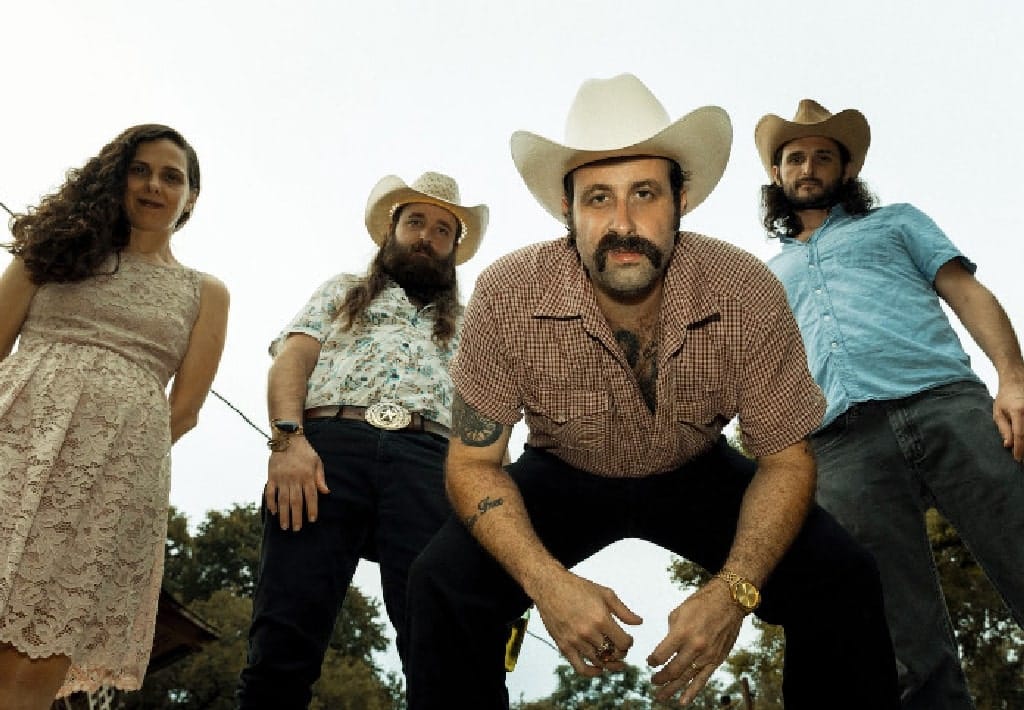
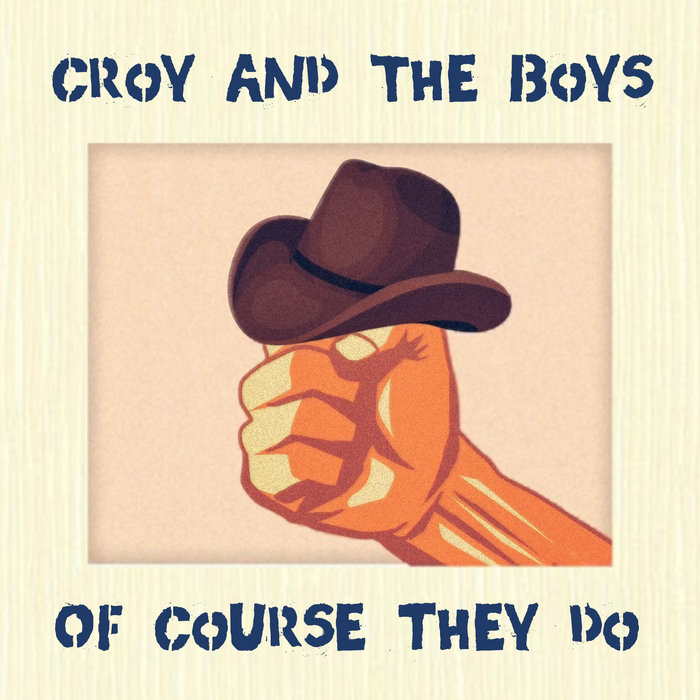
One of the first names that always comes to mind when I'm trying to convince people that folksy protest music is neither new nor an anomaly (you know this, I know this, but it feels like people need constant reminding) is the Austin honky-tonk band Croy and the Boys, which is a both staple of local dancehalls like the White Horse and Sagebrush — soundtracking the hippest two-steppers — and an act that embraces the possibilities of integrating salient observations about material injustice into fun, twangy music. Covering punk bands (those who read our Sunny War interview will remember she, too, mentioned Crass), making working man's anthems ("I Know About No Money" is a particular favorite) and insisting long before it was a national rallying cry that it's fuck ICE all day, every day, Croy and the Boys are some of the very best of contemporary country — their steadfast political righteousness is just a bonus.
 indiscreet
I spoke with frontman Croy (that's Corey Baum) for our little protest music series about his journey with music that accurately reflects our material reality — how he ties together so many threads that people imagine to be disparate into a lovely, listenable, invigorating package. And we didn't even get into the band's too-real anthem, "Don't Let Me Die In Waco"! In short: even if you don't read the interview, listen to more Croy and the Boys.
Natalie: What was your political/musical awakening?
Croy: I mean, Rage Against The Machine in, like, seventh grade or something. I just never totally bought the narrative about the United States and about capitalism. I didn't have that terminology yet, but I just never fully related to…the state of society. From a pretty young age, I was looking for things that explained to me why I felt that way. At one point I bought a pair of Vans that came with a Punk-O-Rama CD, and that was kind of my introduction to punk. Even within punk, I was drawn to the more overtly political punk songs and punk artists. I've always been into folk music too — love Woody Guthrie, and the more protest-y side of Bob Dylan.
 PIDGE
PIDGE
Natalie: Thinking about not quite having the specific leftist (or whatever) terminology as a young person, but still having a kind of radical impulse, would you say you've gotten more radical as you've gotten older?
Croy: It's actually a funny story. Bowling Green [Ohio, where Croy is from] a good college town. The townie side is very rural, we have, like, "Drive Your Tractor to School Day." FFA is huge. But then there is a university there. I was around a lot of small town, rural stuff, but I also then had a lot of access to culture, which was cool. I got into punk, as I said, and so I knew that word "anarchy" from "Anarchy in the U.K." I walked into this used bookstore, and I asked the guy working there, "Do you have any books on anarchy?" [laughs]. This was so long ago, but later I found out that that guy just happened to be a world renowned scholar on anarchism — he's a main translator for [Pierre-Joseph] Proudhon, a famous early French anarchist. Basically, I randomly asked one of the best people in the country about what anarchy was. I was like a seventh grader, and he gave me this book called The Anarchist that included work by people like [Mikhail] Bakunin and Emma Goldman and Alf Barton and all these anarchist theorists. So I guess when I say I didn't have the language for it, like a year later I did [laughs].
I don't know if I'm more or less radical. But I'm always trying to learn more, and I feel like I know more now than I ever have.
Natalie: When did that political bent — the urge to make a statement about…the state of things — become a part of your music making?
Croy: When I first moved to Austin, that was kind of the low point of my political awareness and engagement. I was moving so far away from home to a place I'd never been, and it's really fun here — a lot more fun than life in Bowling Green, Ohio [where he's from]. If anything, the fact that the early Croy and the Boys stuff wasn't political was more of an anomaly. But I even had a little punk band around that time called Dumb, and we had plenty of social commentary and that kind of stuff.
Natalie: Was the Howdy High Rise record the first project that kind of had "social issues" vibes on it?
Croy: With Croy and the Boys, definitely. It wasn't really a conscious decision — it's kind of what I'm naturally more inclined to write — but at the time we were getting half our income from playing like, gigs at Allens Boots. We were in some sort of Austin civic Rolodex to call if your company or organization was having a cowboy-themed party. As we were recording Howdy High Rise, it was definitely a conversation like, "Well, that stuff could be going away." I do think it obviously reduced some of that. I mean we played an event for, like, the Porsche Owners Club two months before that album came out, and haven't really done anything like that since.
 LEVICIOUS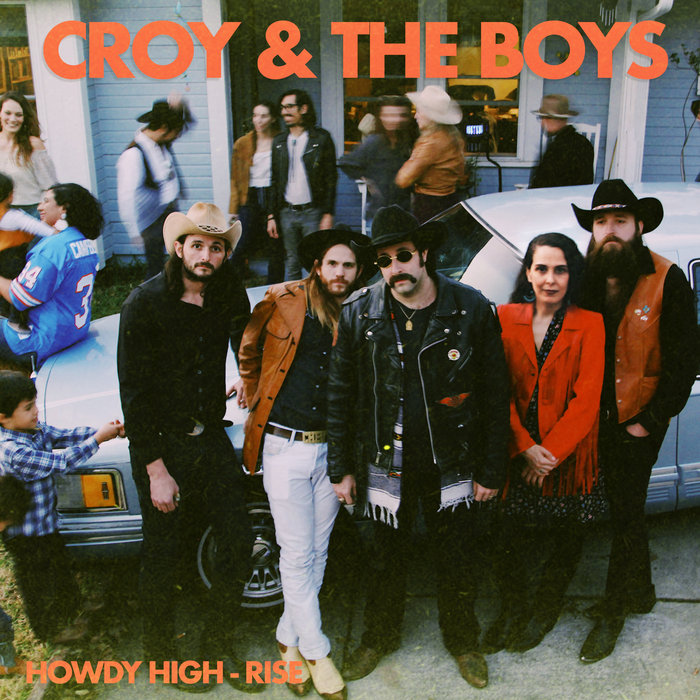
I mean moving to Austin was really — life-changing is an understatement. I was coming from a smaller Midwest town, I'd never even been to the South or Texas or anything. I joined this guy Leo Rondeau's band, and I always say that felt like going to Honky Tonk University. I got thrown into the dancehall culture and country music culture, and got a real awesome history lesson on country music. I think on that first Croy and the Boys record, I was just really enamored with trying to find my voice in country music, messing with conventions in my own little way, but not like in an overt lyrical way. I moved to Austin to be a country artist, but I realized that I was still kind of a folk artist until I joined Leo's band and learned what it meant to make country music.
Natalie: In spite of, obviously, a long, rich history of country music, that subverts political expectation, there is still this association of country and conservatism — which of course there's plenty of ammunition for. Do you encounter many people who are surprised by the fact that you make honky-tonk music with lyrics about anti-capitalism, for example?
Croy: I think that at this point, the type of country fans who would be surprised by what I'm doing probably don't totally consider me country. I do think that maybe the fact that we play dance music and dance halls and people are dancing while we're saying these things surprises people?
Rural Americans are by and large conservative. But I think more country music is more apolitical — obviously there are some famous conservatives, Toby Keith et al, but the function that it serves is to pacify, not rile people up. That's why at a time when small towns across America are losing their hospitals and everyone's addicted to opioids and the bottom's just completely falling out on small town America, all of a sudden every country song is, "I'm from a small town and it's great and it's cool/I've got a pick-up truck, and everything rules."
Natalie: Wow, you just wrote a No. 1 song.
Croy: [Laughs] So I think it plays like a pacifying role for people that obviously should be discontented with a lot of things. The name of the game is maximizing profit and your fan base by just not alienating anybody.
Natalie: You famously have a day job as a union electrician — you're not just paying lip service labor. What does making music that has a kind of social message mean to you right now, and also why is it important to you to sort of have those union bona fides and also still be creative and be an artist?
Croy: I'm always listening to protesting type music, so it's always the right time to make that, because there's always someone out there that wants to hear it. There's this quote that I heard a long time ago, and I always attributed it to John Doe [of X], but then I asked John Doe about it once he moved to Austin and he doesn't think he said it. But it's this idea that protest songs are not meant to change someone's mind or win someone over to your side. They're just to provide a soundtrack for the people that are out doing the real work. I always keep that in mind. Maybe I can help refine an idea that people already have, but I'm not trying to reach across an aisle or convince someone of anything.
Protest music is important right now because there is a wave of protests happening, and the way to support that is to give them something that reaffirms what they're doing in song, something to sing along to while they're doing it.
The importance of being a union electrician comes down to the fact that it's really expensive to live in the United States, specifically in Austin, and I have a kid and wife and no college degree, so going into the trades was the best bet for me to have a job. I definitely believe that organized labor is the only chance we've got of making the world a better place for us as workers. Money is power, and we don't have enough money as workers to have any power except collectively. Big Bill Haywood of the IWW famously said, "When the working class is organized, all we have to do is put our hands in our pockets and the ruling class is whipped." There are a ton of problems with the labor movement in America currently and throughout its history, and we're not in a fighting state as a labor movement at this point in time, but I still believe that it's the best vehicle for change, because it's the only power that we got — the only chance we've got.
A lot of it started because I realized that being a touring musician was not going to allow me to be the father that I wanted to be. I knew I had to figure out a way to stay in the area. But when I first started my electrician's apprenticeship, part of me was like, "Maybe I'm just done with the music thing." I thought it would be hard to be half-engaged in a music career. What I realized pretty quickly was that I was more committed than ever to being an artist and expressing myself through art, and less interested than ever in pursuing a career in music and dealing with all of that. I'm still writing music. I've been reading a lot of poetry, and I've been writing a lot more poetry. We've got a new record that we're almost done with called Polkas Of My Discontent, "Fuck ICE," will appear on that. Touring and "building the brand" are just not things I'm driven to do at the moment, but I still want to create and record and play music with my friends.
When I was younger, it really felt like the only way to be like a free and true artist was to just be all in on art. This is so stupid as an adult now to say, but part of the reason that I dropped out of college was that I came to this idea that a real artist can't have a backup plan or a degree. For a long time, I do think that that was true — my first decade or so in Austin was a creatively free, very inspired time, and I do feel like I was living my art in a cool way. But at some point I began to realize that something changed, and that now the actual path to artistic freedom for me is to have a day job so I am not dependent on the art for the income.
You can make an okay living playing three-hour honky-tonk sets around Texas, and specifically in Austin, there's a million corporate gigs. But I began to feel more and more like I couldn't do both things. I couldn't just freely write about what I wanted to write about and also be trying to support myself with those kinds of things, because if the client looks up Croy and the Boys on Spotify and sees a song called "Croy Hates The Police," they might not book that band for that gig anymore. Now I don't think twice about anything that I post or that I write. I feel totally free because I'm making my money somewhere else, so I don't have to worry.
 indiscreet
Natalie: When did you write "Fuck I.C.E."? What inspired it, besides the obvious?
Croy: I went to college for like, almost six years and then…did not graduate. I managed to spend a lot of time and money there without getting a degree. The most politically active group on campus was the Latino Student Union, so I actually joined the Latino Student Union and that was kind of my first real introduction to Latino culture. What I'm trying to say is that immigrant rights have always been very important to me. Even during the Obama era, I was going to tons of protests in support of immigration reform and against his deportations and stuff. The right to move is a basic human right; the world is everyone's, and people should be able to live wherever the hell they want.
I wrote and recorded that one during the early days of the pandemic, just acoustically. But I always wanted it to be a full band song. I actually had contacted some conjunto groups in San Antonio to talk about maybe trying to record it with one of them, but then we started working on this new record, and it just fit the vibe of the record — more polka-inspired and political. At the time that I wrote the song, it felt like half the people in the country didn't really know what ICE was and didn't really care. Then when we were going in to record the full band version [late 2024], it felt like the whole country had turned against immigrants, like ICE had never been more popular. That was when we had [Texas Democrat] Colin Allred running on like, "Don't believe Trump's lies — I ALSO hate immigrants" [laughs].
So when we were recording it, I wouldn't say I was nervous but it felt like a really bold statement and I wasn't sure how people were going to react. But then they started shooting American citizens in the face, and things changed. We're actually going into the studio this weekend to finish that record. I had no plans to release "Fuck I.C.E." that prematurely — like it was just gonna come out with the record — but given how insane everything got, it just was like, "Okay, we gotta fucking put this song out."
I like the idea of writing protest songs. To me, you put out a song like that in that moment not because you're like, "Perfect, maybe it'll go viral!" I put it out because I wanted people to have a thing to yell. Give them a melody to yell "Fuck ICE" to while they're in the streets. I wanted to put this out when it could be useful to people.
 indiscreet