Can "I Like Everything But Country Music" Finally Die?

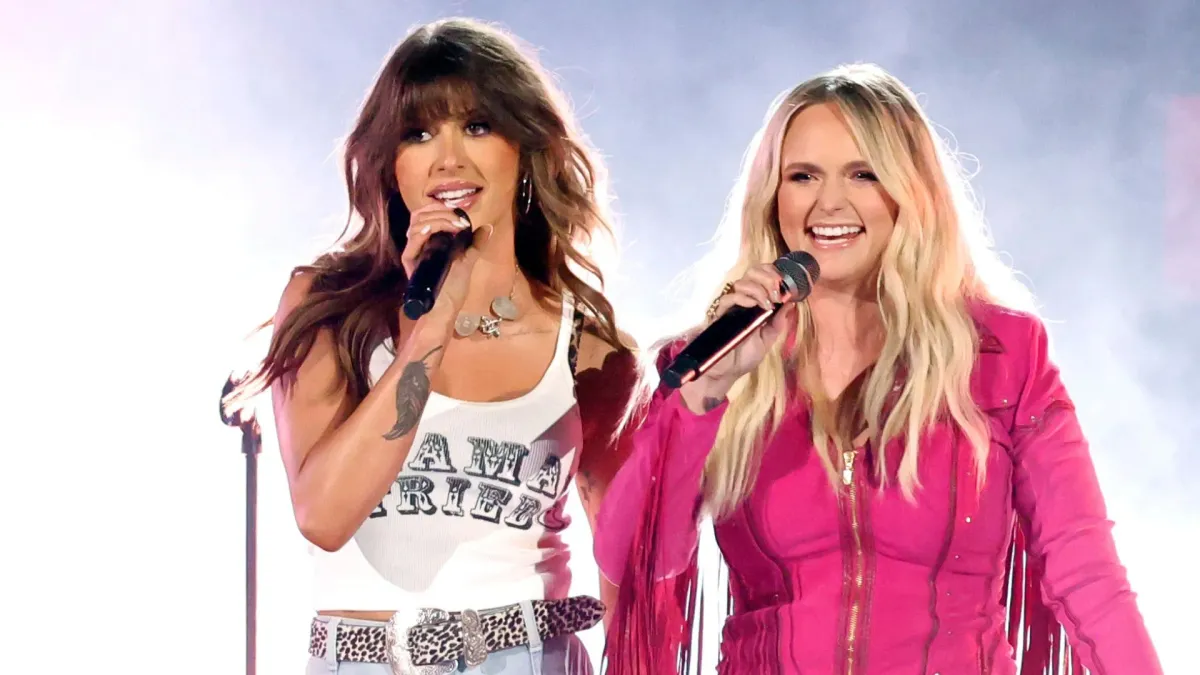
As I've watched Ella Langley's "Choosin' Texas" break record after record - now topping Taylor Swift for most weeks by a country woman at the top of the Billboard Hot 100 - I've started to get a little angry. Not at the song (we've already established how much I love the song!), but at the listeners: it's a gnawing sort of "what took you so long" that I can't shake as America fully embraces what is very clearly a very country song by a country artist. Though Morgan Wallen has been the dominating force in the genre on these charts these past few years, his hits, like "What I Want," "Love Somebody" and "I Had Some Help" are far more pop than anything else - Wallen favors straddling sonic lines in his singles, making music that might signal "south" in presentation but rarely in construction. Historically, most country songs that have made it to the top of the all-genre charts have been crossover moments or by crossover stars ("Cruise," Taylor Swift, "Islands in the Stream").
"Choosin' Texas," is different than most anything that's reached the top on both the Hot 100 and Hot Country Songs since the 1980's, because it is so specifically country (and even Kenny Rogers and Dolly Parton's "Islands In the Stream" was considered a major crossover at the time). And people are loving it - I've seen declarations of "this is the greatest country song of all time" lobbed about, I've seen it seeping into pop culture left and right (as a parent of young kids, when the nine year olds are obsessing over something, it's really grabbed ahold of the zeitgeist). Part of me wants to celebrate - this is huge, especially for women in the genre. It's huge for country in general, seeing so many people feeling attached and connected to a song that is undisputedly twangy and two-steppin', and not in any sort of ironic or novelty fashion. The other part of me wonders not "why this song," because I don't want to take any credit away from a truly great tune and artist, but "why not others, too?"
Great, unapologetically country songs - country songs worthy of reaching the top of the Hot 100 - have always existed (many of them written by Langley's "Choosin' Texas" collaborator, Miranda Lambert, and I could pick a heaping handfull of her singles that could have been crossover smashes). But they just never make it, because the cultural barriers have been too high. There are many reasons one could point to in explaining this, but it's hard not to think specifically lately about the general public intolerance for country music - i.e. the popular "I like anything but country music" refrain - and how signaling, not taste, plays such a crucial role in shaping what gets to be popular.
Sociologists have long studied how those music tastes have been used to signal class - how what you say you don't like often carries more specific weight than what you do. "I like anything but country music" is far less about the songs than it is those social signifiers. As someone who wrote a whole book about women who worked to change who feels welcome in country music, and who is welcome at all, I know that this is a complicated issue - sometimes it's less about social signaling and more about truly feeling pushed out and excluded. Other times, it's an easy way to say "I don't fuck with a basket of deplorables" without actually saying it.
But, now we're here. "Choosin' Texas" is a hit. And I hate to break it to you: if you like that song, it's not the one song you like in a genre you hate. You just...like country music, full stop! You actually might even like southern people (gasp) and realize they aren't all whatever stereotype you've pictured (louder gasp).
This is something I spoke about with Luke Combs for a GQ profile that ran last week - that he doesn't just want to be the one artist someone likes in the genre, but he wants to open the door to a whole backlog of amazing artists. I love that about him, that he views himself as an ambassador of country music around the world. His popularity, I think, is proof, alongside the success of "Choosin' Texas" and other banner moments, that people really do like country music a lot more than they are willing to let on - not to mention the global success of artists like Tyler Childers, Kacey Musgraves, Shaboozey, Chris Stapleton, Lainey Wilson and Sturgill Simpson and the entire "country is cool" movement or whatever we're calling it. But there's a big difference between something being cool - and therefore ephemeral - and truly allowing perception to be changed permanently.
We can't go back in time and make "Baggage Claim," "Diane" or "Springsteen" Hot 100 #1's, or any number I could list. But changing the cultural attitudes towards the genre matter - in terms of opportunities for both audiences and artists (and even things like the Grammy awards, where a bias towards the genre still exists, ahem ahem Snipe Hunter not winning country album of the year ahem). And maybe we can leave "I like anything but country music" where it belongs: with Earl in the trunk, dead as a doornail.